
Who was Tamar?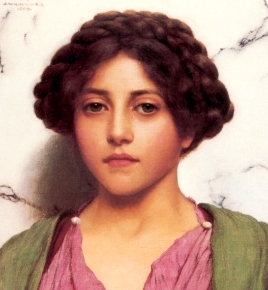
- Tamar was the beautiful daughter of the great King David and Maacah, a princess from a neighboring kingdom
- Her half-brother Amnon became obsessed with her
- He lured her to his room and raped her, then refused to marry her
- She was disgraced, and never married
- Her embittered brother Absalom rebelled against David, but was defeated and killed
- Tamar lived out her days in the royal harem
Obession and Lust
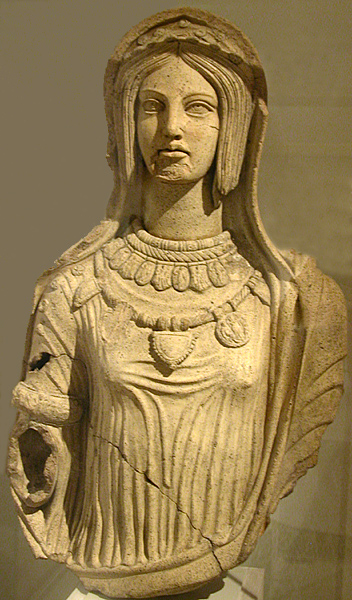
High-ranking woman
David had a number of wives, but one of the most high-ranking was Maacah, the daughter of King Talmai of the neighboring kingdom of Geshur.
Maacah had two children, both of them extraordinarily good-looking.
- The first was her son Absalom, a favorite of his father’s,
- the other her daughter Tamar, whose looks stood out even in this family of beautiful children.
Tamar probably had a marriage arranged for her when she was still a child – this was the usual procedure for royal princesses. But things did not go to plan.
When Tamar reached puberty her half-brother Amnon, David’s eldest son, developed an unnatural obsession with his young half-sister. He watched her, he waited in places where she passed, he could not get enough of her presence, and above all he wanted to possess her.
The catch was that he was not prepared to offer her marriage.
Why not? At that time it would have been a possibility, though not a preferred one. Perhaps the marriage that had been arranged for Tamar was too politically sensitive to upset, or maybe Amnon thought that David would disapprove of his obsession, seeing it as a weakness.
After all, a king could not afford to let emotions interfere with politics.
Cruel Deception

Read what modern Bible scholars say about Tamar
In any case, Tamar was out of Amnon’s reach. As a royal princess and a virgin, she was closely watched by the harem eunuchs. She lived in the women’s quarters, and could not go outside its walls unless accompanied by other women and guards. There seemed no opportunity for Amnon to get her alone, let alone into his bedroom.
To make matters worse, she seemed to have been intelligent and sexually moral, with only a sisterly interest in him.
But Amnon was not used to being refused something he wanted. He must have discussed his obsession with a friend of his, a clever cousin called Jonadab, because this young man came up with a plan. They would lure Tamar into Amnon’s room on the pretext that her half-brother was ill, and once they were alone there Amnon could have what he wanted.
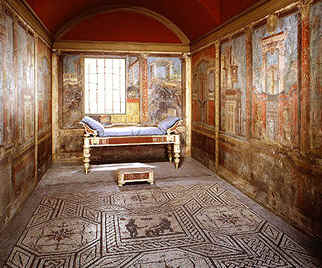
Bedrooms in ancient mansions were designed to receive guests/visitors.
Amnon took to his bed, feigning illness. This caused consternation in the court. The health of a king’s eldest son was no small matter, and David was concerned. The doctors were consulted, and when they could not come up with a cure he visited his son, coming to the room where the young man lay.
Amnon sighed in a dispirited way and said he could not eat, but on being pressed by his father admitted that yes, he might be able to eat if his sister Tamar cooked some food and fed it to him.
David, gullible in matters regarding his sons, immediately sent for Tamar to come and tend her brother.
Tamar obeyed her father. She may have had reservations about coming to her brother’s private quarters but she had no choice. Law and custom required her to obey her father, and in any case she would have been escorted by her own servants.
 She came to Amnon’s quarters and prepared a kind of boiled dumpling that Amnon asked for. She then set the food before him, but Amnon, pretending to be petulant and out of sorts, refused to eat.
In a seeming fit of temper he then ordered everyone out of the room, and because he seemed ill and cranky his servants obeyed.
The Rape of Tamar
Since they were directly commanded to go, her servants also had to leave the room – David’s heir was not someone to be crossed. Then, still feigning the irritation of a sick person, he went into the bedroom alcove and insisted he would only eat the food if she brought it to him there and fed him with her own hand.
When she did this, leaning forward with the food, he took hold of her and pulled her to him, molesting her.
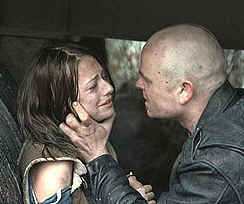
Rape victim
Alone and unguarded, she had no chance of fending him off. She resisted him as best she could, she argued and pleaded, pointed out that what he was doing was wrong, that they could marry if he wished, that rape would bring ruin to them both.
Tamar was struggling for her life, not just her virginity. If she was no longer a virgin no-one would want her, no-one would marry her, even though she was the king’s daughter.
But her pleading had no effect on Amnon. He was too strong for her, and he raped her.
Amnon abandons Tamar
When Amnon had finished his brutal business, his feelings for Tamar suddenly changed. Now he was revolted by the sight of her, could not bear to look at her, was filled with a loathing far stronger than the lust he had previously felt.
He shouted at her to get out of his room, get out of his sight, but she pleaded with him, trying to retrieve something from this desperate situation. They might still marry, she argued.
 To cast her out now, a violated woman, was worse than raping her, since it meant the crime continued. She could never marry or have children, never have a normal life. As far as the people around her were concerned, she would be a used object, unwanted, an outcast.
Amnon ignored her words. He was without pity or remorse. He had his servant literally throw her out of the room. He would not even use her name: ‘Put this woman out of my presence, and bolt the door after her.’
Outside Tamar collapsed onto the floor, wailing. Nearby were the cooling ashes of the fire she had used to cook his food. She plunged her hand into them and put the ashes onto her disheveled hair.
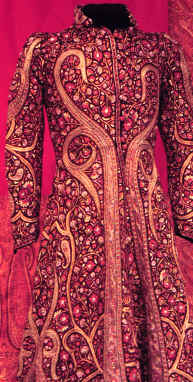 Then as she staggered away she tore the front of her richly embroidered outer robe as a sign of her despair. With her hand on her head, the sign of a bereaved woman, she staggered through the palace corridors crying aloud, until she reached the harem quarters of her mother.
Harem women react
Her appearance, and the women’s quick realization of what had happened, plunged the harem into turmoil. The three women most affected were Tamar, her mother Maacah, and Ahinoam, the mother of Amnon. The sisters of Tamar and Amnon would also have been intimately affected.
Other wives of David and their children would be sympathetic, but would quickly look to see what they could gain from Amnon’s crime – which way the wind blew, and what chance might there be to seize some political advantage for themselves. Among them would be Bathsheba, a commoner newly introduced into the harem.
But at the center of this storm stood Tamar, her position as darling of the king and petted princess now destroyed forever.
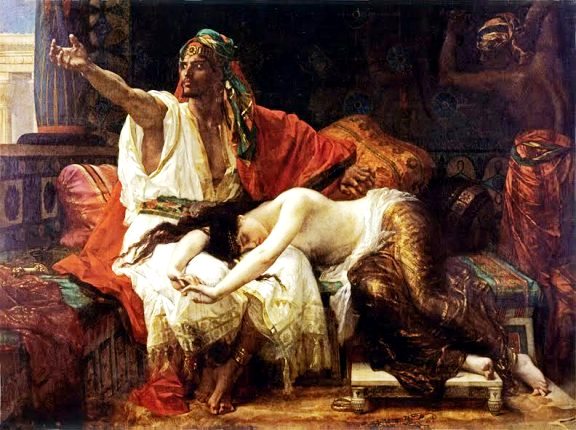
Tamar and her brother Absalom, by Alexandre Cabanel
Her Brother Demands Justice
When her brother Absalom found out what had happened he comforted her as best he could, and moved her out of the harem into his own house. Then he went to the King and demanded that Amnon marry his sister – marriage between a half-brother and sister was a possibility in this extreme case, though biblical law prohibited it elsewhere.
Prince Amnon refused outright to marry her, the callous streak already evident in David now coming out in the son.
David was angry, but did nothing to resolve the situation, or even to punish Amnon for what he had done. This was typical of David – he could never chastise his sons even when they deserved it. Instead he did what many people have done when confronted with rape or incest – he protected the abuser rather than the victim, and tried to hush things up.
Since David did nothing to remedy the wrong, people around Tamar were powerless to help the girl. Like many a victim of crime she gradually became invisible, the crime ignored, not spoken of.
But her brother Absalom was not so accommodating. He could not force Amnon to marry the devastated Tamar, but he would take his revenge – vendetta was part of Near Eastern culture.
Rapist murdered

Absalom waited, biding his time.
For two years he said nothing, did nothing, but then he set his trap. He gave a feast for all David’s sons. At the height of the festivities when Amnon was half-drunk, Absalom had his half-brother killed, stabbed to death in a scene reminiscent of a Mafia killing. In the ensuring turmoil Absalom escaped, fleeing for sanctuary to Geshur, his grandfather’s territory.
Did the murder of Amnon help Tamar in any way? Probably not. It may have given her some fleeting satisfaction, but as matters stood she was condemned to the life of a childless widow.
It is to be hoped that Tamar did not accompany her brother to Geshur, since her status there would have been even worse that in Israel. Instead, Maacah may have used what little influence she now had to see that her daughter returned to David’s harem. In either place Tamar’s position would have been lowly, little better than a servant.
Absalom’s Revolt
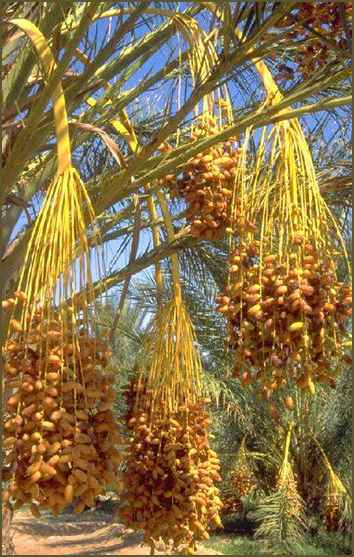
Tamar means ‘date palm’. The name suggests food, security, life
Some years after the rape of Tamar, Absalom led a revolt against his father King David. He was able to take over the royal city of Jerusalem, and force his father to flee.
When he invaded the palace itself, he found that David had left ten of the women of the harem behind him. He was advised to rape these ten women publicly, on a roof top in full view of the city, so that there could be no doubt that the act had been done. This burnt Absalom’s bridges with his father and make it impossible to back down from full revolt.
Absalom raped the women, dishonoring his father’s women just as his own sister Tamar had been dishonored. Since the place that he did this was almost certainly on a roof terrace of the palace, it was quite possibly the same place that David had first seen Bathsheba, an ironic twist noted with relish by the narrator of the story.
Absalom’s revolt against David was not successful, and the young man died after a terrible battle. The fate of the ten raped women is not recorded.
What became of Tamar?
The only information we have is that Absalom named his daughter Tamar, and the text notes that she was a beautiful woman.
Bible Text – Amnon & Tamar
 2 Samuel 13:1-22, New International Version (NIV)
13-1 In the course of time, Amnon son of David fell in love with Tamar, the beautiful sister of Absalom son of David.
2 Amnon became so obsessed with his sister Tamar that he made himself ill. She was a virgin, and it seemed impossible for him to do anything to her.
3 Now Amnon had an adviser named Jonadab son of Shimeah, David’s brother. Jonadab was a very shrewd man.
4 He asked Amnon, “Why do you, the king’s son, look so haggard morning after morning? Won’t you tell me?” Amnon said to him, “I’m in love with Tamar, my brother Absalom’s sister.”
5 “Go to bed and pretend to be ill,” Jonadab said. “When your father comes to see you, say to him, ‘I would like my sister Tamar to come and give me something to eat. Let her prepare the food in my sight so I may watch her and then eat it from her hand.’”
6 So Amnon lay down and pretended to be ill. When the king came to see him, Amnon said to him, “I would like my sister Tamar to come and make some special bread in my sight, so I may eat from her hand.”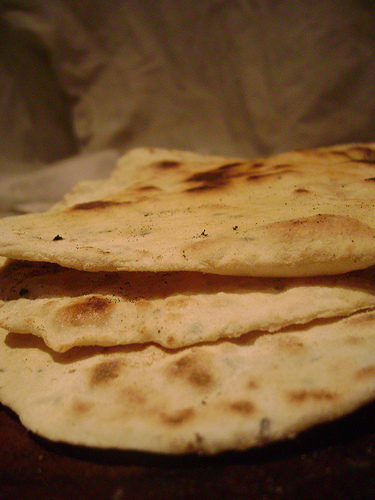
7 David sent word to Tamar at the palace: “Go to the house of your brother Amnon and prepare some food for him.”
8 So Tamar went to the house of her brother Amnon, who was lying down. She took some dough, kneaded it, made the bread in his sight and baked it.
9 Then she took the pan and served him the bread, but he refused to eat. “Send everyone out of here,” Amnon said. So everyone left him.
10 Then Amnon said to Tamar, “Bring the food here into my bedroom so I may eat from your hand.” And Tamar took the bread she had prepared and brought it to her brother Amnon in his bedroom.
11 But when she took it to him to eat, he grabbed her and said, “Come to bed with me, my sister.”
12 “No, my brother!” she said to him. “Don’t force me! Such a thing should not be done in Israel! Don’t do this wicked thing.
13 What about me? Where could I get rid of my disgrace? And what about you? You would be like one of the wicked fools in Israel. Please speak to the king; he will not keep me from being married to you.”
14 But he refused to listen to her, and since he was stronger than she, he raped her.
15 Then Amnon hated her with intense hatred. In fact, he hated her more than he had loved her. Amnon said to her, “Get up and get out!”
16 “No!” she said to him. “Sending me away would be a greater wrong than what you have already done to me.” But he refused to listen to her.
17 He called his personal servant and said, “Get this woman out of my sight and bolt the door after her.” 18 So his servant put her out and bolted the door after her. She was wearing an ornate[a] robe, for this was the kind of garment the virgin daughters of the king wore.
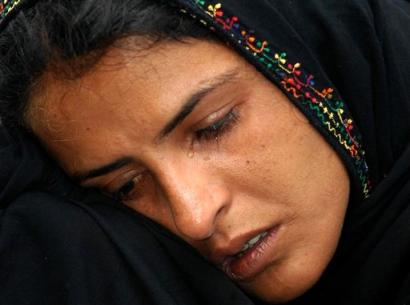
19 Tamar put ashes on her head and tore the ornate robe she was wearing. She put her hands on her head and went away, weeping aloud as she went.
20 Her brother Absalom said to her, “Has that Amnon, your brother, been with you? Be quiet for now, my sister; he is your brother. Don’t take this thing to heart.” And Tamar lived in her brother Absalom’s house, a desolate woman.
21 When King David heard all this, he was furious.
22 And Absalom never said a word to Amnon, either good or bad; he hated Amnon because he had disgraced his sister Tamar.
Women in the Bible – the Royal Women of the House of David
Tamar, royal princess raped by her half-brother Amnon, avenged by her brother Absalom
Bible People: David
King David, the flawed hero
What were families like?
How were they different?
Bathsheba
This royal woman’s story
Women of the Bible
GOOD

and BAD

With Bible texts and historical information
_____________
See the Youtube video of the rape of Tamar, and the anger of Absalom