
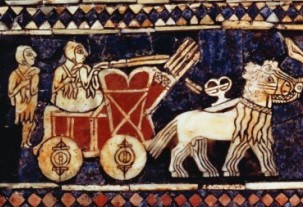
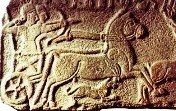
Heavy-wheeled chariots shown on the Standard of Ur, circa 2,500 BC
Who was Deborah? A Bible heroine, a Judge of Israel – not a judge who passes sentence on criminals, but a leader and adviser in times of trouble. She badgered the Israelite general into joining battle with the Canaanites, even though the enemy had more soldiers and better equipment. God sent a rainstorm that made the Canaanite chariots sitting ducks for the Israelite slingmen – and Deborah was hailed as a national heroine.
The story of Deborah has four parts:
1 Deborah, a judge of Israel, summoned Barak
(Judges 4:1-11, 5:1-18).
Deborah was ‘just a woman’ but when war came she took up the reins of leadership – even though the Israelites were outnumbered and under-equipped.
2 The battle, then Sisera fled
(Judges 4:12-16, 5: 19-23).
The enemy had hundreds of iron-wheeled chariots that could crush the Israelites into the ground. But Deborah tricked them into driving these chariots onto marshy land where they were bogged down. The Israelite slingmen and archers picked them off one by one, like ducks in a pond. Sisera, the enemy general, fled from the battlefield towards the encampment of a woman called Jael the Kenite.
3 Jael met Sisera and killed him
(Judges 4:17-24, 5:24-27.).
As he passed by her tent, Jael called the unwary Sisera into her tent. He was exhausted and desperate for a refuge. She hid him and fed him, and he fell into a deep sleep. Then she calmly took one of her tent pegs and with one blow hammered it through the side of his head. She was hailed as a national heroine by the Israelites.
4 The mother of Sisera (Judges 5:28-30).
Sisera’s mother waited and waited for her son to return. But he was already dead by Jael’s hand.
The story appears twice in the Bible:
Who was Deborah?
The story of Deborah occurred in approximately 1125BC, when Deborah was a judge of Israel. The word ‘judge’ did not mean then what it means now. A judge in Israel was a tribal leader who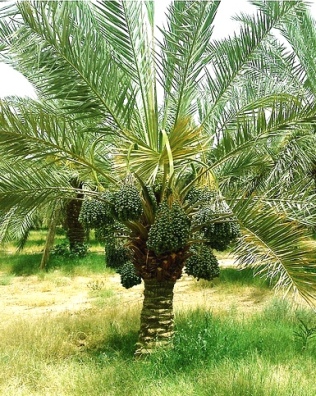
- in times of peace had authority to settle disputes and problems
- in times of war acted as a rallying point to gather the tribes and organize resistance.
Deborah is the only woman judge mentioned in the Book of Judges. The people of her time had no difficulty in accepting her as a judge. This suggests that judges were seen as ‘God’s people’, and their gender was unimportant.
‘At that time Deborah, a prophetess, wife of Lappidoth, was judging Israel. She used to sit under the palm of Deborah between Ramah and Bethel in the hill country of Ephraim; and the Israelites came up to her for judgment.’ (Read Judges 4:1-5, 5:1-11).
Deborah is introduced as a ‘prophetess’, but a prophet was not someone who foretold the future. They ‘heard’ a message from God in some way and passed it on. Often the message was about staying apart from the surrounding cultures and maintaining the unique identity and beliefs of Israel.
Deborah also acted as an oracle when, sitting under a special palm tree in the hill country of Ephraim, she gave judgment on particular matters.
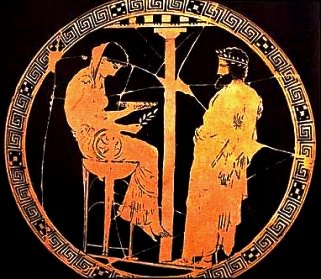
The oracle at the Greek shrine of Delphi
This palm tree was the ancient equivalent of a judge’s courthouse, a place where people went when they needed a dispute settled.
Oracles were common in the ancient world. People believed they had special wisdom given by God. Oracles could give advice on difficult problems.
An oracle listened, considered the problem or question, then spoke words of advice. These words might be in the form of a riddle, which the listener had to interpret, or they might be more direct.
Judge of Israel, summons Barak
Deborah was inspired to speak out about the deteriorating state of the country around Ephraim. Law and order had broken down, and it was no longer safe to travel on the highways.
It has to be said that the Israelite settlers in the hill-country of Canaan were largely to blame for these problems. They continually raided the Canaanite farms and villages on the prosperous plains below their hill settlements, and of course the powerful city-states retaliated and ‘oppressed’ the Israelites.
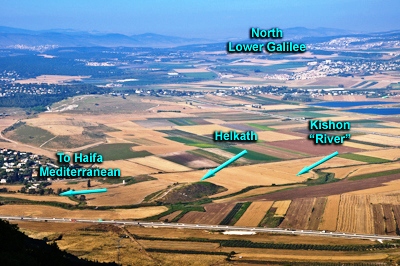
The Wadi Kishon (Kishon stream)
The Canaanites were led by King Jabin of Hazor. Jabin ruled a large, fortified city-state in upper Canaan, and may have been the leader of a confederation of Canaanite city-states. His aim was to restore Canaan’s power by exterminating the Israelite invaders (Judges 4:6-11 and 5:12-18).
Now threatened with the might of King Jabin’s army, the Israelites turned to Deborah. She summoned Barak, an able military leader and spoke very direct words to him. He must go to Mount Tabor with as many fighting men as he could assemble, and so draw King Jabin out. She in turn would draw out Jabin’s fearsome general, Sisera, and taunt him into fighting at the Wadi Kishon.
At first, Barak was reluctant to enter into battle against Sisera, the military commander of the substantial troops of King Jabin of Hazor. His hesitation is hardly surprising, since the Canaanites possessed vastly superior military technology. Sisera had a disciplined, professional army, and his troops were armed to the teeth with iron weapons and chariots in large numbers.
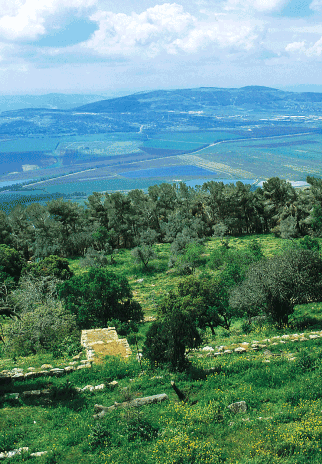
What the fight was about: the rich farming land of the Plain of Esdraelon and Jezreel
Barak had citizen militia from most of the twelve tribes of Israel, though some of the tribes ignored the situation and stayed at home – to their eternal disgrace.
So Barak knew that his own forces were fewer in number, comparatively untrained, and with inferior weapons. Against such odds, it was unlikely that he could succeed. To an onlooker his reluctance must have seemed common sense rather than fear. He did not wish to enter into a battle he could not win.
There are, however, rare figures in human history who inspire such loyalty in the people around them that they can achieve what seems impossible. Sometimes they are military leaders, sometimes leaders in government, sometimes cult figures. Deborah seems to have been such a person. She had the charisma needed to convince people they could take extraordinary risks and succeed. The force of her personality and her complete faith in God gave Barak the courage to face odds that he knew to be overwhelming.
The Battle is fought, and Sisera flees
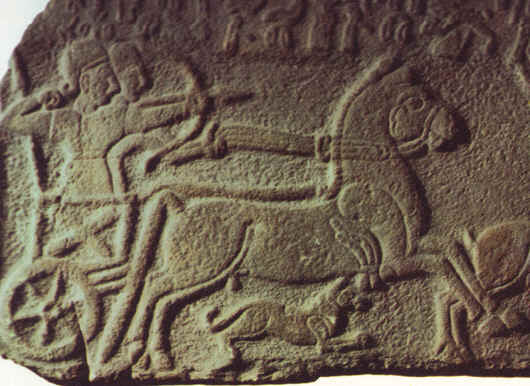
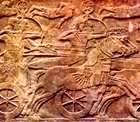
War Chariot and horsemen. From the Lions’ Gate at Malatia, in Anatolia, 9th century BC. Hittite Museum, Ankara.
Deborah’s army, led by Barak, assembled at Mount Tabor, a brave but motley force.
There was no standing army in pre-monarchic Israel, and defense depended on the response of the tribes, rallied by a leader such as Deborah.
Sisera, on the other hand, assembled a terrifying force. He had 900 iron-trimmed chariots at his disposal, and they could do fearsome damage. Their weight and velocity as they charged into an opposing army could plough a dreadful furrow through the ranks of soldiers.
The Canaanites had the technology to build this sort of military equipment; the Israelites did not.
All they had were poorly equipped foot soldiers now pitted against the magnificent chariots of the Canaanites, and their complete faith in God.
‘Then Deborah said to Barak “Up! For this is the day on which the Lord has given Sisera into your hand. The Lord is indeed going out before you.” So Barak went down from Mount Tabor with ten thousand warriors following him. And the Lord threw Sisera and all his chariots and all his army into a panic before Barak.’ Read Judges 4:12-16 and 5:19-23
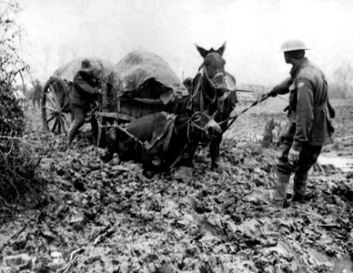
War horses trapped in thick mud
The Canaanites ought to have won the battle easily. They did not. There was a tremendous downpour and the 900 chariots, meant for quick maneuvering on firm ground, became bogged in the mud. See a diagram of the battlefield below.
Just before the battle, a flash flood swelled the nearby Wadi Kishon and turned the battleground into deep mud, giving the Israelite foot soldiers the advantage over the Canaanite chariots.
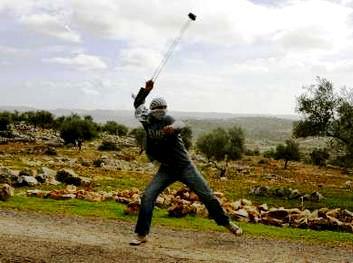
Boy with a slingshot similar to the ones used by the ancient Israelite militia
There was a wonderful irony in this. Baal, the main god of the Canaanite forces, was god of storms and weather. He was worshipped by the Canaanites, with Anat, a fierce goddess who fought vigorously to protect her family. Yet the Canaanites lost the battle because of a storm!
The Israelites could hardly believe their luck. Yahweh, their god, was clearly superior to the god of the Canaanites.
Abandoning his army, Sisera fled on foot away from the battlefield, towards the encampment of Jael, the Kenite woman.
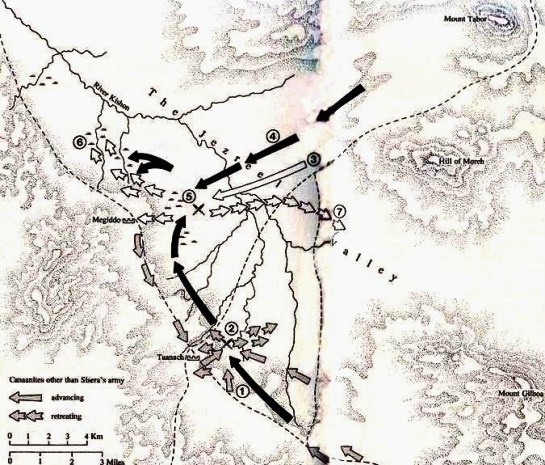
Phase 2 of the battle
Jael meets Sisera and kills him
‘Most blessed of women be Jael,
The wife of Heber the Kenite,
Of tent-dwelling women most blessed.’
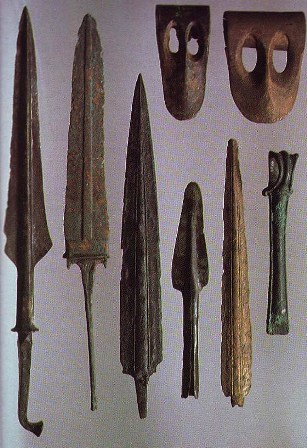
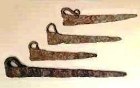
Metal weapons like those used at the time of Deborah and Jael
Jael was a tent-dweller. Her family were tinsmiths who made farming utensils, domestic items, and weapons. They traveled whenever they could find work. Her campsite must have been close to the battlefield because her family was making and supplying weapons for the army.
Through her husband Heber, Jael had kinship ties with the Israelites. Heber was descended from Jethro, who had been the father of Moses’ wife. She was therefore bound to the Israelites by kinship obligations.
Nevertheless Heber, a sensible business-man if ever there was one, was on good terms with the Canaanites, so Sisera saw the encampment of Jael and Heber as a refuge.
Jael had her own tent, separate from her husband’s tent. At this period in Israelite history it was still common for several women to be married to one man. In such a case, each wife had her tent which she made, pitched and maintained herself. When she had children, they lived with her in this tent.
‘So he turned aside to her into the tent, and she covered him with a rug. Then he said to her, “Please give me a little water to drink; for I am thirsty”. She opened a skin of milk and gave him a drink and covered him. He said to her “Stand at the entrance of the tent, and if anybody comes and asks you “Is anyone here?” say “No”.
Read Judges 4:17-20 and 5:24-25.
When Sisera arrived at the encampment in the last stages of exhaustion and terror, Jael saw him and called him to her tent.
Bible women: Deborah.
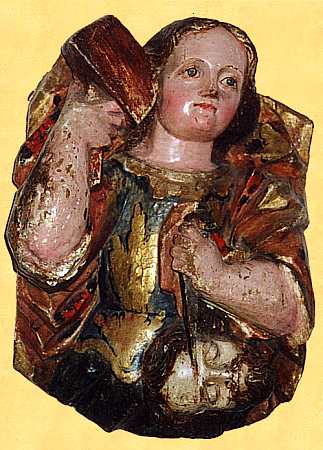
Medieval carving of Jael killing Sisera
One point to notice is that Sisera went into Jael’s tent, not the tent of Heber her husband. The ancient laws of hospitality in the Middle East were very strict. A guest, once ritually invited into the home, had to be protected and cared for, even at the expense of everyone else in the house. But only the chief man of the household could offer ritual hospitality.
Jael offered help to a fleeing enemy general, but not ritual hospitality.
Sisera went into Jael’s tent. She covered him with a rug, which suggests that he was afraid and wanted to hide. He asked for water. She gave him a drink of goat’s milk. Exhausted from the battle and his flight, he fell asleep.
Then occurred one of the most graphically described murders in the Hebrew Scriptures:
She put her hand to the tent peg
And her right hand to the worker’s mallet;
She struck Sisera a blow,
She crushed his head,
She shattered and pierced his temple.
He sank, he fell,
He lay still at her feet.’ Read Judges 4:21-24 and 5:26-27
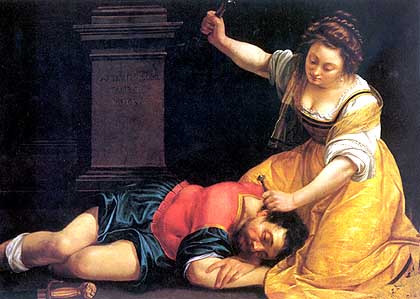
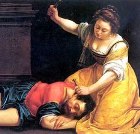
‘Jael and Sisera’ by Artemisia Gentileschi
Faced with a man who was far superior to her in physical strength, Jael used her wits and courage. She took the wooden hammer used to put up her tent and one of the pegs that held the tent ropes, then with one expert blow she drove the peg deep into the side of Sisera’s head.
(Go to Bible Top Ten Murders to read about other famous murders in the Old Testament.)
The story does not tell us Jael’s motive for killing Sisera. Whatever her reasons, the Israelites celebrated her as a national heroine, who together with Deborah had saved them from their mortal enemies. They also relished the irony of the situation: Sisera the mighty general fell not into Barak’s hands, but Jael’s.
There are extraordinary similarities between the stories of Jael and the young boy David, when he killed the giant Goliath. Both of them
- were physically weak and smaller than their opponent
- employed unusual weapons
- used their wits rather than orthodox military methods
- exacted bloody slaughter on their enemies, David hacking off the head of Goliath and Jael piercing Sisera’s skull.
The Mother of Sisera
In the last part of the Song of Deborah is a sketch of a third woman, not Israelite like Deborah and Jael but a Canaanite enemy.
‘Out of the window she peered
the mother of Sisera gazed through the lattice:
“Why is his chariot so long in coming?
Why tarry the hoof-beats of his chariots?”’
Read Judges 5:28-30.
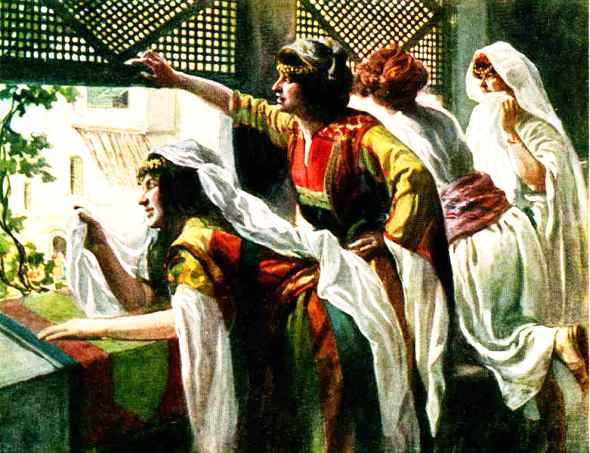
Women at the Window, James Tissot
Sisera’s mother stood at a window, watching the road and waiting anxiously for her son to return with the spoils of battle. As the reader knows, he will never return. Jael has killed him.
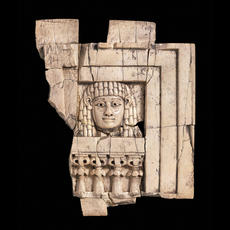
Nimrud, Woman at the Window, ivory carving from the north-west palace of Ashurnasirpal II at Nimrud
The image of a woman watching at a window had special significance for the people who listened to this story. It was a common image of the goddess in Canaanite religion. Clay statues dug up at the archaeological site of Ugarit show a woman’s face looking out from a lattice window, and showing Sisera’s mother at a latticed window linked her with the Canaanite goddesses.
She is the mother of something that is already dead, although she does not realize it. Even the wisest of the princesses around her, the priestesses of the goddess, do not realize the truth. The text implies that Canaanite religion is also dead, though its followers have not yet realized the fact.
What is the message of Deborah’s story?
- Trust in God. The Israelites put their complete faith in Yahweh. In return, Yahweh helped them defeat a seemingly invincible enemy and gain valuable territory. This battle, and their unlikely victory over a superior army, gave the Israelite tribes their first access to the fertile and prosperous plain of Esdraelon/Jezreel.
-
What the fighting was about: rich farming land of the Plain of Esdraelon and Jezreel
Right can defeat might. Jael’s story is similar to the story of David and Goliath. Though she was a weak woman, Jael triumphed over a seemingly invincible warrior.
The story ridiculed the Canaanite warriors: being murdered by a weak woman was a shameful way for a soldier to die. It was also shameful for their leaders, who had been ‘stung’ by a holy woman.
To drive the point home, there was a humiliating element of sexual derision in the story: male sexual symbols such as the hammer and nails were used, but by a woman against a man.
Names in Deborah’s story: meanings
Deborah is ‘bee’ in He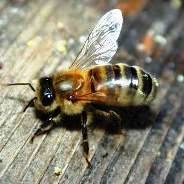 brew. It also means ‘spirited or fiery woman’. A bee is small, hardly worth noticing, but it can give a nasty sting when it wants.
Barak means ‘lightning’. The name ridicules the man. It is an ironic pun on Barak’s reluctance to go to battle, and the terrible storm that God sent to help him.
Sisera is not a Semitic name. He may have been one of the legendary Sea Peoples, skilled in military matters and feared wherever they went.
Jael means ‘wild gazelle’ or ‘wild goat’, a good name for a rule-breaking woman from a nomadic tribe.
Note: Apart from Deborah, the Judges were hardly role models:
- Jephthah offered his own daughter as a sacrifice (Judges 11:29-40)
- Samson told lies and chased after prostitutes (Judges 16:1)
- Gideon agreed to the making of a pagan cult object that the Bible calls an ‘ephod’, but which is clearly different from the breastplate (also called an ephod) worn by priests later in Israel’s history, and seems to have been used for seeking oracles (Judges 8:22-28), etc.
Deborah stands out for her wisdom, courage and faith.
Read about more women
in the Old and New Testament
Bible Study Resource for Women in the Bible: Deborah and Jael, Sisera and Barak
Deborah, Jael links



Movies

Modern films often tell a story like Deborah’s. The character Sarah Connor in the movie ‘Terminator’ defends her people by becoming a leader/savior when no-one else will.
__________
What can we learn from Deborah? Try a guided reflection about
Hope in God
Against all odds the Israelites won – by God’s intervention, or a stroke of luck, or both. The Canaanite chariots hurtling across the plain on their iron wheels were stopped dead in their tracks by a sudden downpour. Bogged in the mud, sinking under their own weight, they were easy prey.