
Who was Jephtah’s daughter?
and why was she sacrificed?
The story of Jephtah’s daughter has two parts:
 1 The vow of Jephtah, Judges 11:1-11, 29-33.
Jephtah was a man of outstanding military ability who rose from despised beginnings (he was illegitimate) to become a leader of Israel.
In the heat of battle he promised God that if he was victorious he would offer as sacrifice the first thing that met him when he returned home from the battle.
2 The consequences of the vow, Judges 11:34-40.
Jephtah won the battle and returned home. As he approached his house, his beloved only daughter ran out to meet him. When she was told about her father’s hideous promise, she courageously accepted that she must die.
For two months before her death she went up into the mountains with her companions, where she lamented that she would never know married love, never hold her child in her arms. She returned, and the vow was carried out.
The vow of Jephtah
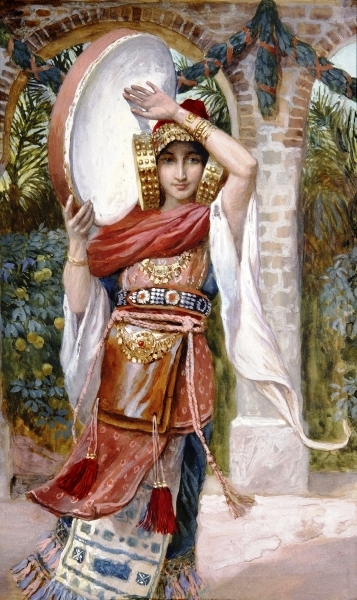
Jephtah’s Daughter, by James Tissot
Jephtah was a man from Giliad. His family background was not what it could have been – he was the illegitimate son of a prostitute.
On two counts, therefore, Jephtah was a social outcast. The problem was made worse by his half-brothers, who ejected him from the family home. This meant he did not even have membership of the clan of his father. Read Judges 1:1-11
- In ancient Israel, belonging to a family clan was essential, since it was a person’s main protection from danger.
- In times of trouble, the members of a clan could usually be depended on to stand by each other.
- The clan also acted as an economic unit, providing the food, clothing and shelter a person needed to survive.
When Jephtah’s brothers ejected him from their clan, they were effectively giving him a death sentence.
Jephtah, however, was not beaten. He may have been an outcast, but he had exceptional talents as a leader and a fighter.
Other outcasts soon gathered round him, so that he became the leader of a sizable group of men who were also without a clan. They lived outside the law, robbing trade caravans and raiding the herds of more law-abiding people.
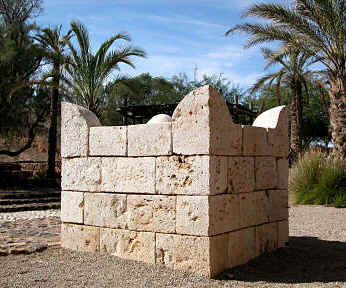
Ancient altar for burnt offerings
When war broke out with the Ammonites, the leaders of Gilead went to Jephtah and his men and asked for help. They believed Jephtah had the skills to lead their army successfully against the Ammonites.
Jephtah agreed to fight, because winning would make him a hero. It would wipe out the stain of his illegitimacy and give him full acceptance among the Israelites.
It was this desire for acceptance that fueled his ambition, and under its influence he made a stupid and cruel vow. No doubt he had a shrewd and calculating nature – he would not otherwise have survived. The vow he made showed he was also, at heart, a pagan.
‘And Jephtah made a vow to the Lord, and said “If you will give the Ammonites into my hand, then whoever comes out of the doors of my house to meet me, when I return victorious from the Ammonites, shall be the Lord’s, to be offered up by me as a burnt offering”.’
Tragedy was about to strike. As he approached his house his beloved daughter ran out to meet him, leading the women singers who greeted returning warriors. A horrified Jephtah knew he must sacrifice her to fulfill his promise.
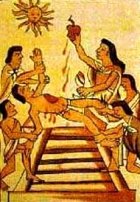
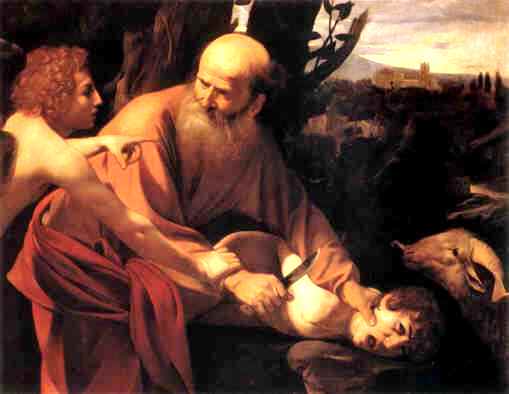
In later times, the Israelites were repelled by the idea of human sacrifice and had strict teachings against it. However, it may have existed in the early period of Jewish history. Examples include the stories of Abraham and Isaac, Jephtah’s daughter, and the king of Moab’s son in 2 Kings 3:27.
Leviticus 20:2-5 has a stern injunction against child sacrifice.
The consequences of the vow
When Jephtah returned victorious from the battle, he was greeted by women singers who went out to welcome him. They were led by his daughter.
‘Then Jephtah came to his home at Mizpah; and there was his daughter coming out to meet him with timbrels and with dancing.’
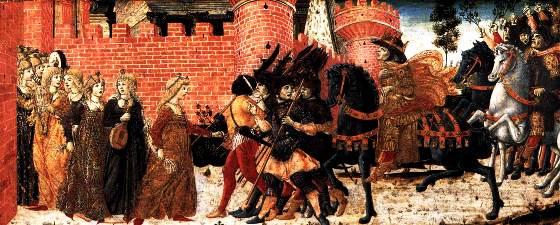
Meeting of Jephtah and his Daughter, Benvenuto de Giovanni
This was a normal custom of the time, and Jephtah should have foreseen it. Women normally went out to greet returning military heroes with songs and poems.
We know of this from other examples, including Miriam (Exodus 15:20) and the women who praised King David (1 Samuel 18:6). Deborah’s epic poem is an example of the type of song they sang.
When Jephtah saw his daughter and realized what he had done, he was distraught with grief, but immediately ‘blamed the victim’, reproaching his daughter for being the one whom he saw first, rather than blaming himself for the vow he had made.
‘She was his only child; he had no son or daughter except her. When he saw her, he tore his clothes and said “Alas, my daughter! You have brought me very low; you have become the cause of great trouble to me. For I have opened my mouth to the Lord, and I cannot take back my vow”.
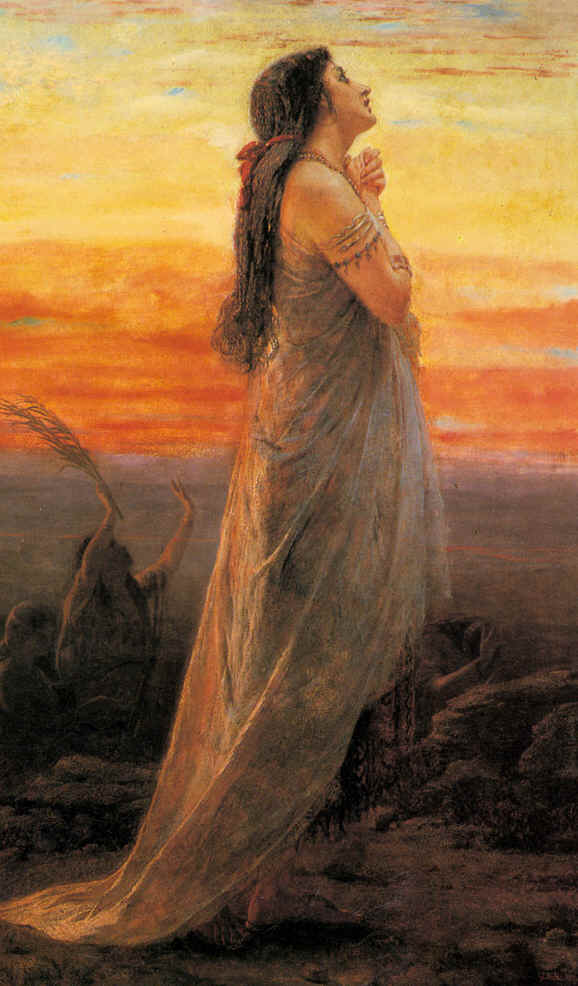
The lament of Jephtah’s daughter, George Hicks
Blaming the victim is a common phenomenon
- in cases of domestic violence
- or when a woman who has been raped is blamed for ‘bringing it on herself’ or ‘asking for it’.
When Jephtah’s daughter heard of her father’s vow, she responded with dignity and restrained anger. She accepted her fate, but on her own terms.
‘She said to him “My father, if you have opened your mouth to the Lord, do to me according to what has gone out of your mouth, now that the Lord has given you vengeance against your enemies, the Ammonites”.’
Modern writers object to the daughter’s passive acceptance of her death, wishing she had objected to her father’s vow.
But in the context of the times Jephtah had to sacrifice her, and she had to accept her fate. Her father made a promise on behalf of his people and he believed that God had accepted the promise, giving him victory in return.
Now the promise had to be honored despite the terrible cost, and the daughter knew this and accepted it.
A twist to the story?
But here’s a thought: is it possible she knew in advance about her father’s vow, and deliberately came out of the house first, thus bringing the vow onto herself rather than on someone whom her father considered expendable, for example a servant?
Could the girl have taken the place intended for someone else in order to show her father the terrible injustice of his action?
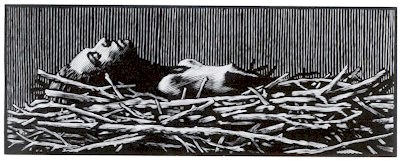
The daughter on the pyre, Barry Moser, engraving
The daughter’s reaction to her fate is shown by what she did, not what she said. ‘And she said to her father “Let this thing be done for me: grant me two months, so that I may go and wander on the mountains, and bewail my virginity, my companions and I”.’
She preferred to spend the last days of her life with her friends, not with the father whose ambition and foolish vow caused her death. In these last days, she wanted the company of those she could trust. With them, she mourned the fact that she would never achieve the goal of all Jewish women: to hold her child in her arms.
Read Judges 11:37-40.
The exact method of her death is not known. If she was a burnt offering, she would have been first killed with a knife, and then her body burnt.
 An annual festival for young women commemorated the death of Jephtah’s daughter – ‘for four days every year the daughters of Israel would go out to lament the daughter of Jephtah the Gileadite’.
This festival may in fact have been an ancient Canaanite ritual which became incorporated into early Judaism. It may have been a rite of passage for young girls as they entered adult life.
Names in the daughter’s story
- Names in the Bible often say something about the person, but in this case the young woman is nameless. There’s a reason for this: people without a name seem less real, so leaving the girl nameless minimizes the horror of the story, making Jephthah more acceptable as a hero of Israel.
- Jephthah means ‘he opens’; Jephthah has a fatal habit of speaking without thinking – he opened his mouth to make the vow and it would have been better if he had remained silent.
Main themes of the story

Flames of a funeral pyre
1. The danger of making rash promises to anyone, even God. This is an epic tragedy about a great man with a fatal flaw. He acts before he thinks. This flaw leads inexorably to his own downfall, and to the cruel death of the one he loves most. It has many points in common with Shakespearean tragedy:
- the hero is dragged down by his fatal flaw
- someone dies because of his rash promise
2. The ends do not justify the means. Jephtah wants to win in battle at all costs – why? To be accepted and acclaimed by people who have previously rejected him. He puts his own desires above the sacredness of life – for he knows that something or someone must die if he wins the battle. He compounds the sin by failing to trust in God’s mercy.
Read about other fascinating women in the Old and New Testaments
Bible Study Resource for Women in the Bible
Women of the Old Testament: Jephtah Sacrifices his Daughter
Jephtah’s daughter
links



Bible study activities
Make a list of movies about tragic heroes who move towards inevitable doom –
as Jephtah did
‘Jephtah came from the bottom of the heap. His mother was a prostitute, and when his father died and the inheritance was divided, Jephtah’s legitimate half-brothers drove him off. He lived like a bandit, gathering thugs and thieves as his henchmen.’
Bible Warriors