The Da Vinci Code controversy
Rachel Kohn interviews Elizabeth Fletcher
Transcript of interview on ‘The Spirit of Things’, ABC Radio National, 21 May 2006
How did a pulp fiction bestseller become a headache for the Vatican and a fascinating alternative for a public that has little connection to the Church?
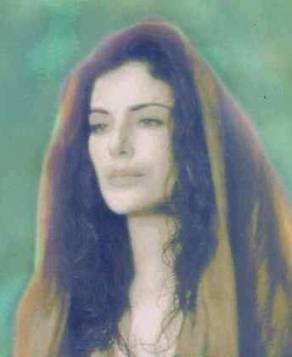
Did Jesus marry Mary Magdalene?
Rachael Kohn: One thing people are agreed on is that The Da Vinci Code is making history, but what kind of history? Hello, I’m Rachael Kohn and this is The Spirit of Things on ABC Radio National.
Is it the history of Hollywood blockbusters, or the history of pulp fiction, or is it the history of Christianity?
There’s no doubt that some of the 40-million people reading the book were hoping to find out the truth about the origins of the Church that no one had revealed before.
Well that’s what the author, Dan Brown, would have you believe. But it seems that there is not much about the book that’s new, and not much about the book that’s true. Why let that stand in the way of a good story, where Mary Magdalene marries Jerusalem’s most available bachelor?
Elizabeth Fletcher is an author and specialist in Biblical women. She’ll tell us what she thinks of The Da Vinci Code.
Apart from anything else, The Da Vinci Code, which is now a film, has the effect of bringing people out of their corners, putting up their arguments in defense of the Bible and promoting their historical knowledge of the ancient world.
Elizabeth Fletcher is a Catholic educator, and decided she was going to do more than argue with friends, she’d put up a website called womeninthebible.net to help teachers and others who might be inclined to believe that Jesus and Mary Magdalene were really married.
They were companions, after all, in the gospels. Is it likely that they had a sexual relationship?
Elizabeth Fletcher: I’d like to say Yes, but I’ve got to say No.
I’d be very surprised if it was as Dan Brown said, for a number of reasons. First of all, Jesus was a Jewish rabbi, not a Christian, and Jewish rabbis are expected to behave almost perfectly by people who admire and listen to them.
Rachael Kohn: But wouldn’t they have expected him to be married?
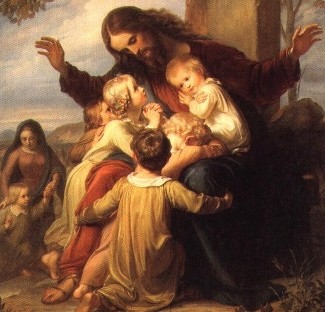
Jesus with children
Elizabeth Fletcher: Yes, they would. Or at least not necessarily expect him to be married, but certainly accept it if he’d been married, because the first commandment in the whole Bible is to be fruitful and multiply, and Jews take that very seriously.
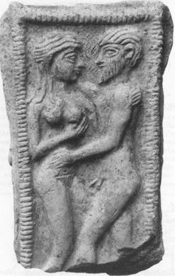
And in fact they’ve always endorsed marriage and sexuality, much more so than the Christian religion has done because of that first commandment. It was expected that a young man would marry, and in fact he wouldn’t have seen himself as fulfilling God’s plan for himself and for humanity if he had not married.
There were exceptions to this rule, if you devoted your life to study, particularly the study of the Torah, then an exception could be made for you, although people would hope that eventually you would marry and they’d certainly push their eligible daughters towards you in the hope that you would accept one of them.
Rachael Kohn: So did Jesus fall into the category of the one devoted to study?
Elizabeth Fletcher: I would say so, yes. He wasn’t a rabbi who stayed in one place, he had a mission, and was an itinerant rabbi. Just the practicality of it, how could you provide for a wife and children (and there would be children) if you were traveling all the time?
Rachael Kohn: And of course the gospels do not describe him as married. So people who think he was married are obviously suggesting it was kept secret, or that he had a secret relationship with Mary Magdalene.
Elizabeth Fletcher: Yes. You can fantasies about that sort of thing, but given the situation in which people in the ancient world lived, it was extremely difficult to keep anything secret, because they lived so closely together. Their living quarters were much smaller than ours. There were so many people crowded into a room that you could not have an affair without people being aware of it.
Rachael Kohn: Well the gospels certainly describe things about Jesus’ behaviour that did arouse some anger in the community, some concerns in the community. How do the gospels deal with those sorts of allegations about Jesus?
Elizabeth Fletcher: Now that’s one of the reasons that I think it’s impossible that Mary Magdalene and Jesus did have some sort of intimate personal relationship, because if he had, his enemies after his death would have accused him of it, and they never said a word.
They did accuse him of two things, and the first was illegitimacy. They said there was something amiss in the circumstances of his birth, and this was much more serious then because a religious teacher had to have an impeccable family background and come from parents who were respected by the whole community. So that was a big problem. The other thing they accused him of was of being too fond of eating and drinking with the wrong sort of people.
So the first two gospels, Luke and Matthew, go to a great deal of trouble to explain the circumstances of his birth, so it becomes respectable.
To get around the second accusation, that he ate and drank with the wrong sort of people, the gospels emphasise his enjoyment of people and place the meals in the context of a ministry towards the disadvantaged in society. So again it becomes respectable. But they never say a word about any sort of sexual misbehaviour, which they would have done if there was the slightest chance that they were going to be believed.
Rachael Kohn: Now speaking of misbehaviour, Mary Magdalene herself doesn’t escape these kinds of allegations. People have presented her as a prostitute because Jesus healed her from the seven demons, or delivered her from the seven demons. Was she in fact a prostitute?

Was Mary Magdalene a former prostitute? Almost certainly not.
Elizabeth Fletcher: No, she wasn’t. There’s no historical evidence at all to say that she was a prostitute.
It’s part of popular mythology, but if you actually read the gospels, which is a very unfashionable thing to be these days, you find that she’s the leader of a group of women who follow Jesus around, that she is a financial patron, in the tradition of Judaism, where if you’ve done well in business you become the patron of somebody who’s doing some good work. And she’s been seriously ill, we know that about her. We don’t actually know what sort of illness it was, but we know it’s serious because the word ‘seven’ is used to describe the demons. People in those days thought that illness was something that came from outside, in the form of a spirit that entered o your body and could be exorcised. But none of this suggests that she was a prostitute.
Rachael Kohn: How did people come around to that view? How were they reading the gospels that made them think she was a salacious woman?
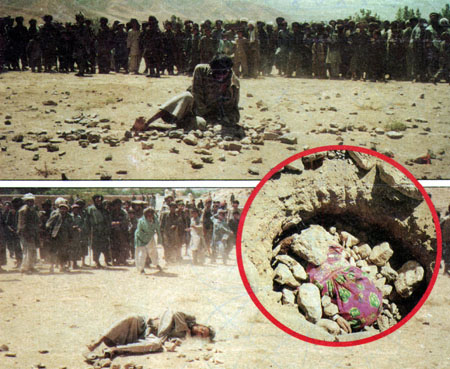
A modern Middle Eastern woman stoned for adultery.
Elizabeth Fletcher: First of all, if you read the gospel of Luke, just after Mary Magdalene is mentioned, there’s a story of the woman with the alabaster jar, and she has all the characteristics that were later transferred on to Mary Magdalene. She’s got long flowing hair, she weeps with tears of repentance, and she’s a woman with a past. And those two stories got coalesced into one story, and poor Mary becomes the woman in the following story.
She’s also confused with the woman who committed adultery and is about to be stoned.
Rachael Kohn: How did people come around to that view? How were they reading the gospels that made them think she was a salacious woman?
Elizabeth Fletcher: First of all, if you read the gospel of Luke, just after Mary Magdalene is mentioned, there’s a story of the woman with the alabaster jar, and she has all the characteristics that were later transferred on to Mary Magdalene. She’s got long flowing hair, she weeps with tears of repentance, and she’s a woman with a past. And those two stories got coalesced into one story, and poor Mary becomes the woman in the following story.
She’s also confused with the woman who committed adultery and is about to be stoned.
But there’s no connection between these women and Mary. It happens in a completely different part of the country, at a completely different time in Jesus’ life.
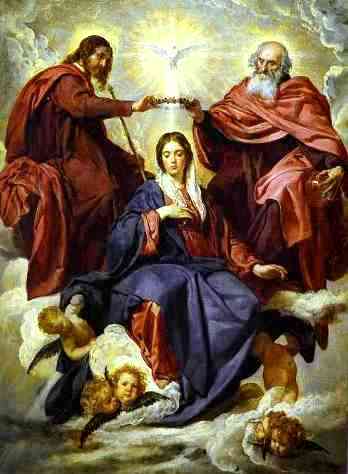
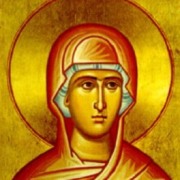
Mary, mother of Jesus, crowned as Queen of Heaven, Diego Valazquez
But there’s no connection between these women and Mary. It happens in a completely different part of the country, at a completely different time in Jesus’ life. But there’s also the point that in the ancient world at that time there was something called Platonic Dualism, a popular philosophy where everything in the cosmos was supposed to have an opposite. So you would have good, bad; man, woman; light, dark, that sort of thing, and Mary Magdalene becomes the perfect foil for the Virgin Mary.
The Virgin Mary was presented as completely blemish-free, Mary as an ex-prostitute. And the idea takes off. I think it particularly takes off in the minds of the celibate male clergy. There are a few fantasies going on there, about Mary the repentant prostitute
Rachael Kohn: So it seems the Church itself may be responsible for some of this imagining of Mary Magdalene.
Elizabeth Fletcher: Yes, it was Pope Gregory I, and I hate to speak badly about him, because he was responsible for Gregorian chant, but he’s the one who muddied the waters about Mary Magdalene.
Rachael Kohn: Now there is a remnant of a text which is called the Gospel of Mary Magdalene. Is that an important source for present-day speculations?
The prostitute, the fallen woman, opposite of Mary, mother of Jesus
Elizabeth Fletcher: It’s one of the Gnostic gospels, and this is a point Dan Brown makes. He said the gospels portraying Jesus as being very human were rubbed out, erased from Christian consciousness, and that the gospels that portrayed Jesus as divine were kept. In fact it’s the reverse. The Gnostic gospels portray Jesus as some sort of super man who is non-human. I’ll give you an example.
There’s a story about him as a little boy, and another little boy bumps into him and knocks him and Jesus turns around and kills him, just strikes him dead, like that. It’s Jesus as a magician – the Gnostic gospels show him much more as a magician. But when they mention Mary Magdalene, they’re writing about 200 to 300 years after the events, and if you put that in our context, it would be like writing about the First Fleet arriving in Australia in 1788 and saying, Well I know exactly what happened on the First Fleet. Well you don’t. You’re just imagining it.
Rachael Kohn: Well Elizabeth, you’re an educator, and particularly interested in women in the Bible. You’ve written a book about women in the Bible. What’s your gut reaction to The Da Vinci Code?
Elizabeth Fletcher: At first I laughed when I read it because the research was so poor, there were so many mistakes.
For example, he’s saying that the emperor Constantine imposed the belief that Jesus was divine on the Christian church, or at least was in cahoots with the Church and imposed that belief on people. But that’s so obviously wrong because all the early martyrs who are there right from the very start, just think of the 1950’s film Quo Vadis for example, with all those early martyrs dying because they were certain in their hearts that Jesus was God. That part of the film is based on fact. That’s why they died. So obviously they believed that Jesus was God and were saying it right from the start of the Church.
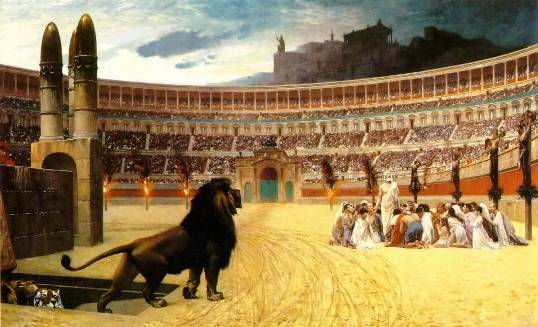
Early Christians died a horrible death
rather than renounce their belief in Jesus
Now Dan Brown blithely says a whole lot of things that you can see quite easily are not true. And I read it, and I thought is this man’s research just bad, or is he in fact very clever, and he’s deliberately inserted a whole lot of mistakes so that people will argue back and give him publicity? And I’m inclined to think that it’s a bit of both. I think he’s researched at a very shallow level from books that are a bit shonky to start with, and then in an almost teasing way he’s put deliberate mistakes just like bait on a hook.
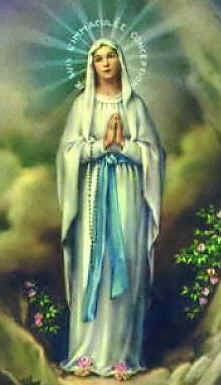
Mary, mother of Jesus, was a strong female presence in Christianity.
Rachael Kohn: So you don’t think he’s out to deliberately sabotage Christianity?
Elizabeth Fletcher: Not deliberately. I think that he’s sabotaging it, but he’s also tapping in to people’s needs. They wouldn’t read the book if it wasn’t answering their own needs, and it is a very exciting read and it’s a good detective story, but it’s just full of historical mistakes. But he’s also addressing I think, the feeling in Christianity especially in Christianity in the last 50 years or so, where there is no major feminine presence. Up until about 50 years ago, the Virgin Mary was very big, certainly in Catholicism, but in all of Christianity. Now she’s been erased, air-brushed out of Christianity, and you think, Well, hang on, half the world’s population are women, where’s the focus for their religious beliefs? If you don’t have some sort of feminine presence, you’re left hanging in the air.
Rachael Kohn: So you think in some ways this could be a genuine attempt to put Mary Magdalene or woman back into the story?
Elizabeth Fletcher: I don’t know if I’d dignify it with that much praise. It might almost be accidental. Maybe he’s working at a subconscious level and he realises that people yearn for something feminine in their religious practice and beliefs.
Rachael Kohn: What do you think about religious educators who assign this book as required reading, or as even optional reading?
Elizabeth Fletcher: I think very few of them would be aware of all the mistakes that are in it, and even if they were, a lot of their students would just take it in as fact, even if they were told, ‘This is a mistake’. A lot of the students would believe what they read. So I would not ever assign it to a Religious Studies class. I think few people are well enough versed in ancient history to see all the pitfalls that there are there.
Rachael Kohn: And I guess that’s how your website womeninthebible.net might be a good resource for teachers.
 Elizabeth Fletcher: Womeninthebible.net Yes, I hope it would be.
There’s this other mistake in The Da Vinci Code that annoys me, and that is that the fertility rites that are described in it involve a post-menopausal woman and her elderly husband. The whole point of ancient fertility rites was procreation, it wasn’t sexuality. The rites were about fertility in either crops or people or animals, and a post-menopausal woman would simply never have taken part in a fertility rite. It doesn’t make sense.
Rachael Kohn: I guess it’s fertility rite 2006 which becomes a sex rite.
Elizabeth Fletcher: Yes, yes.
Rachael Kohn: If Jesus had been married and did have children, just like he had siblings, would it make any difference to the point of Christianity, the message? That is, has Dan Brown and all the people who support or promote the version of events that he has which is that Jesus and Mary Magdalene went off and had children, have they sort of cottoned on to something that is ultimately irrelevant in the Christian story?
Elizabeth Fletcher: I don’t know what you mean by irrelevant?
Rachael Kohn: Well Jesus had siblings.
Elizabeth Fletcher: Yes.
Rachael Kohn: So what if he had children? Would that have changed anything about the Christian message?
Elizabeth Fletcher: No, I don’t think so. It might have changed later church practice, there mightn’t have been the focus on celibacy that there was. But the two core teachings of Jesus are ‘Love God’, and ‘Love the people around you’. They wouldn’t have changed. That’s a universal teaching, and I can’t see that that would have been affected by his having children.
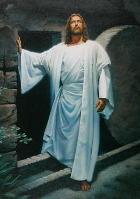
I was reading John’s gospel yesterday, and I came across something that convinced me that Jesus could not have been married to Mary Magdalene. There’s a scene after Jesus’ death, he’s died, he’s been put inside the tomb, Mary Magdalene and the other women come back to the tomb, look inside, the body is gone, and they’re distraught. They know he’s dead because they’ve put his dead body into that very tomb, so they know that he’s dead.
Yet they can’t find him, and they’re absolutely beside themselves. They’re inside this garden area outside the tomb, and somebody comes towards Mary. She doesn’t look at this person, she’s too distraught. She says, ‘Where have they taken the body? It’s gone.’ and the person just says ‘Mary’, and as that person speaks, she realises it’s Jesus.
Now if they had had a personal, intimate relationship, she would have responded at that moment with the name she used all the time for that person. She was past thinking logically. And the word she uses is rabbouni which is Aramaic for rabbi. Now you don’t call a person that you have had an affair with, or whose child you’re carrying, rabbi. You use their personal name. And when I read that I thought, ‘Ah, that’s the clincher. You don’t use a title to a person who you’ve had an affair with.’
Rachael Kohn: Sounds pretty convincing to me. Elizabeth, thank you so much for being on The Spirit of Things.
Elizabeth Fletcher: It’s been a pleasure.
Rachael Kohn: Elizabeth Fletcher is an author in Sydney and a specialist in women in the bible, and that’s the name of her website womeninthebible.net where you can look up all of them.
Women of the Bible; Bible Study Resource
Interview with Elizabeth Fletcher about The Da Vinci Code
Da Vinci Code links




Bible study activities
has a list of movies about women like Mary Magdalene – women who take a leadership role to support someone they believe in
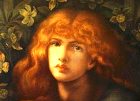
Famous paintings of
The Resurrection
New website