
Maacah II, princess, beloved wife, exile
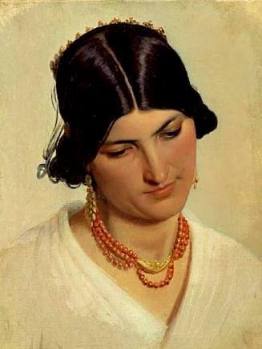 Maacah’s life was certainly not dull. Her father was one of the great tragic figures of the Bible, Absalom. She saw his rebellion and grotesque death.
Then Solomon, her father’s rival, married her to his son – rather an odd thing to do until you learn that the young prince, Rehoboam, loved her passionately.
A love match, but their happiness did not last…
Maacah’s life
- She lived through the reigns of five kings: David (circa 1,000-962BC), Solomon (962-922), Rehoboam (922-915), Abijah (915-913), and Asa (913-873)
- She was the daughter of Absalom, who rebelled against his father David when David failed to punish the rapist of Absalom’s sister Tamar.
- Married by King Solomon to Rehoboam, she had at least four sons; the Bible says Rehoboam loved her more than his other wives
- Rehoboam came to the throne fairly late in life, at 41, so she would not be young either
- She saw her husband mishandle the delicate political situation, and then the ten northern tribes seceded from the kingdom
- The southern kingdom of Judah was seriously depleted, much poorer without the resources of the northern kingdom of Israel
- Five years later the Egyptian Pharaoh Shishonk raided Judah and the city’s treasure were lost
- When Rehoboam died and her son Abijah became king, Maacah was the gebira – Queen Mother
- Abijah died after only two years
- Her grandson Asa succeeded and there was a power struggle between the two.
- Maacah lost, was deposed, and lived out the rest of her life in the Jerusalem harem.

Birth and Marriage
Maacah is described as the daughter of Absalom; she was therefore from a branch of the family that had recently rebelled against the authority of David, founder of the dynasty.
She was also linked, through her father, to the idea of kingship by popular acclaim, rather than through inheritance. King David struggled against this: he wanted kingship by inheritance, so that his own dynasty could rule. Absalom preferred the ancient method of choosing a king – by popular choice.
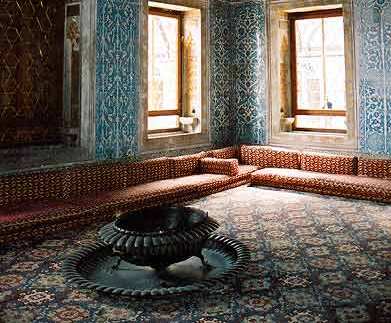
Harem rooms in Topkapi Palace, Turkey
When it was time for Maacah to marry, her cousin Rehoboam was chosen. He already had at least one other wife who had given him sons, but Maacah was his favorite. He is said to have loved her more than any of his other wives and concubines. She remained in the palace harem, where she had grown up.
A modern reader might balk at the idea of two such closely related people marrying, but marriage between a man and his father’s brother’s daughter was seen as the ideal alliance in ancient Israel. The two young people were not necessarily full first cousins, since the brother might be a half-brother, as Absalom was to Solomon.
Rehoboam later chose Maachah’s son Abijah to succeed him. She has other sons, Attai, Ziza and Shelomith. Her husband Rehoboam reigned from 928-911BC, and she was Queen Mother in the years 911-908BC.
Solomon Dies and the Problems Start
Rehoboam was the son of an Ammonite princess, and this probably played some part in his selection as heir. It shored up the valuable alliance Ammon, a threatening neighbor.
By the time that Solomon died, Rehoboam was already 41, no longer young.
The last few years had been increasingly difficult. The ten northern tribes were taxed more heavily than the two tribes living in the south, in Judah, and when Solomon died they used the opportunity to negotiate for better conditions.
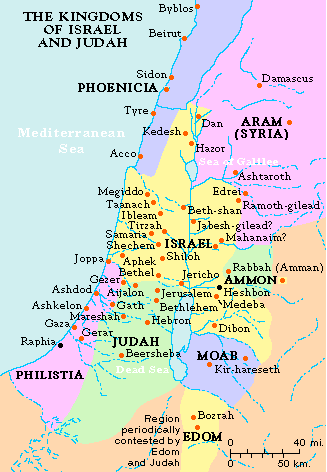
Map of the breakaway states of the North (Israel)
The Coronation
The northern tribes insisted that Rehoboam’s coronation be held at Shechem, a pro-northern centre. Rehoboam gave in to their wish.
At his coronation the situation came to a head. Face to face with their king, the northern chieftains demanded reforms. The levies and taxes imposed by Solomon were unendurable. They balked at the drain in money and manpower. They also saw Rehoboam as being heavily biased in favour of the southern tribes – which he was.
Rehoboam played for time. He consulted with his advisers.
The older and more experienced among them told him to concede, to give the tribes what they asked for.
The young men in Rehoboam’s entourage, on the other hand, advised him to take a firm hand. They felt there had already been too many concessions made by Solomon, and that to continue this would be a sign of weakness. Not only that, but they urged him to speak in insulting terms to the tribal leaders, to put them in their place and show who was boss.
The situation is remarkably similar to the one faced by King Edward VIII of England when he tried to marry the twice-divorced Wallis Simpson. He too listened to the advice of friends rather than to experienced statesmen, and suffered the consequences.
Instead of negotiating as Solomon would have done, he threatened to raise the taxes even higher.
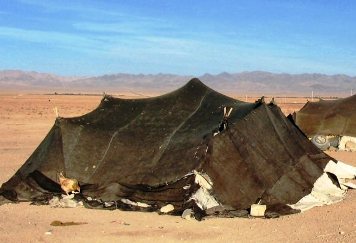
Tents of nomadic tribal herdsmen
When all Israel saw that the king did not listen to them, the people answered the king, saying, “What portion do we have in David? We have no inheritance in the son of Jesse; To your tents, O Israel! Now look after your own house, David!” So Israel departed to their tents.
But as for the sons of Israel who lived in the cities of Judah, Rehoboam reigned over them. (1 Kings 12:16-17).
One wonders where Maacah stood in all of this. Her father had died for the principle of popular selection by the tribes (as well as many other grievances against King David). But she, as the favorite wife, must have had some part in Rehoboam’s decision to flout the tribes and behave autocratically.
The Northern States Break Away
There was a violent reaction to Rehoboam’s ultimatum. The northern tribes refused outright to accept his demands and withdrew to the safety of their own territories.
Rehoboam responded by sending his tax collector, Adoram, to impose his will, but the unfortunate man was captured and stoned to death.
The coronation was aborted, and Rehoboam retreated to Jerusalem, where he assumed the crown of Judah, but not Israel.
After a breathing space of some months, he assembled a large army to invade and subdue the northern tribes, but one of his advisers, Shemaiah, persuaded him that the odds were against him. He abandoned his plan, and in doing so lost all the rich territories of the north. Henceforth he ruled only tiny Judah.
Shishaq Attacks Judah
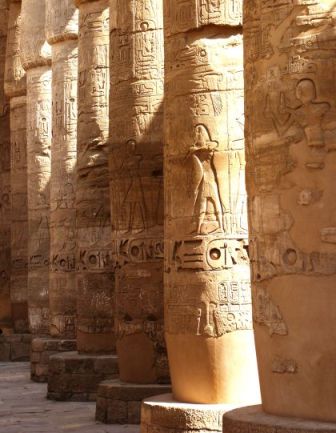
The names of towns captured during Shishak’s campaign appear in a list enscribed on the south entrance to the sanctuary of Amon in Karnak (above)
Five years later he faced another national emergency. The Egyptian Pharaoh Shishaq (Sheshonq I, founder of the 22nd dynasty) and his allies invaded Judah. There had been an alliance between Solomon and the Egyptian rulers, and one of the most important wives of Solomon had been the daughter of Pharaoh.
But her family was gone, replaced by Shishaq. He invaded Judah with a striking force of 1,200 chariots and the Lybian and Nubian infantry, and the entire territory of Judah was left open to rape and pillage. Jerusalem and its palaces were sacked.
The wealth of the city was looted, and among the items stolen were the golden shields that Solomon had made for his body-guard, treasured items that had been stored in his Temple.
The jewelry belonging to Maacah and the other women of the royal harem would have been prised from their fingers and given into the coffers of Shishaq.
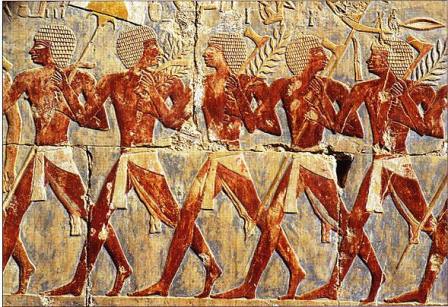
Egyptian Light Infantry. Jerusalem was sacked by soldiers like these.
When Rehoboam returned he replaced the shields, but without the resources of Solomon he was forced to replace them with brass, not gold. What resources he had were funnelled into the building of a series of fortresses and defensive walls around his territory. These were working defense centres for storing food and arms, all within riding distance of each other, all watching and reporting back to Rehoboam’s central command centre in Jerusalem.
The jewelry of the royal women would not have been replaced.
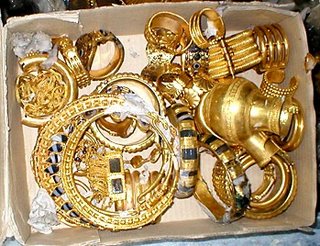
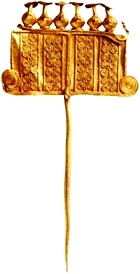
Gold jewelry and utensils from excavations at the Women’s Quarters at Nimrud
Rehoboam Dies
Twelve years later Rehoboam died. He had eighteen wives and sixty concubines, who had borne eighty-eight children. He chose Maacah’s son Abijah to succeed him.
Now Maacah came into the full power of a Great Lady/Queen Mother. This position would normally be held for the rest of her life – or until her son died, if that was before her own death.
The Role of the Gebira
The Gebira was very powerful indeed. This was especially so for Maacah because her son tolerated the fertility religions.
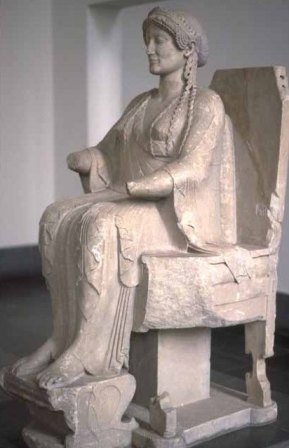
Ancient statue of a queen
Where did the gebira’s power come from? Her role seems to have been an official office, including cultic tasks related to the cult of the goddess Asherah. She may have been the high priestess of Asherah, representing her on earth, standing beside the god Yahweh.
Yahweh was the spiritual father and guide of the king. Asherah was his spiritual mother.
‘…if the Judean royal ideology holds that Yahweh is the adopted father of the king, then is it not possible that the adopted mother of the king is understood to be Asherah, given that Asherah was seen by many – in both the state and popular cult – as the consort of Yahweh? The language of divine adoption may imply not only Yahweh, the male god, as surrogate father, but also Asherah, the female consort, as surrogate mother.
If this is so, the implications for the Judean queen mother are enormous. As the human mother of the king the queen mother could be perceived as the earthly counterpart of Asherah, the king’s heavenly mother. The queen mother might even be considered the human representative, even surrogate, of Asherah….. We should see the cultic functions undertaken by the Judean queen mothers on behalf of the goddess Asherah as standing in close relationship to the political respnsibilities assigned to the gebira within her son’s court.’
‘The Queen Mother and the Cult in Ancient Israel’, Ackerman, Journal of Biblical Literature
Abijah Reigns Two Years
But Abijah reigned for only two years. Why? The Bible text does not tell us. He may have died a natural death, or been murdered in a palace coup. This is a possibility, since he was fiercely hated and opposed by the Yahwist party.
Asa Becomes King
After his death the Yahwist party came into ascendancy. It dominated the successor to the throne, Abijah’s son (or brother) Asa.
Maacah would not have taken this lying down. She was still the Gebira. But she must have been out-manouvred, because the young King Asa got rid of her.
According to the Bible text, she was accused of making an image of Asherah. But there are hints all through the Bible that worship of the fertility gods and goddesses continued alongside worship of Yahweh, and there were hill-shrines, sacred pillars, poles and ‘high places’ scattered throughout the country. Judah-Israel was, after all, dependent on agriculture, and the fertility rituals regulated the dates for planting and harvesting crops.
So the fight about religion would seem to be a power struggle between the new monarch Asa and his Yahwist supporters on the one hand, and Maacah and the fertility religions on the other. Asa had to strike a deal with the Jahwist priests to gain their support in his grab for the throne.
Maacah Deposed
Maacah lost. She, for so long the most powerful woman in the kingdom, was now forced to live out the rest of her life in the claustrophobic harem.
Women in the Bible – Royal Women of the House of David.
Maacah, daughter of tragic Absalom, beloved wife of Solomon’s son Rehoboam
Maacah II links
Clothing in ancient times

Jerusalem
The ancient city of David
Solomon
Story of an astute politician and negotiator
Jewelry
Some magnificent pieces worn by royal women