Maacah, David’s wife
Triumph, murder, tragedy…
 Maacah was the daughter of a neighboring king
- She married King David and lived in King David’s harem
- She bore David’s third son Absalom, an exceptionally handsome boy. Then she had a daughter Tamar, noted for her beauty; also another son Hanan
- When Maacah’s daughter Tamar reached puberty, her older half-brother Amnon developed an unhealthy obsession for her, and raped her
- Maacah and Absalom complained to David, but he did nothing
- Two years later Absalom murdered Amnon, then fled to his maternal grandfather’s kingdom
- Both Maacah’s children were now disgraced, so her prestige was low
- After three years Absalom returned to Jerusalem, but not to the palace precincts
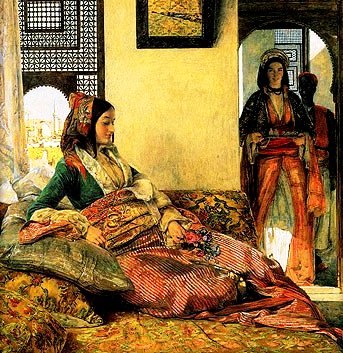
Life in a harem, John Lewis
- Absalom undermined David whenever he could
- Solomon was born to David’s latest and favorite wife Bathsheba
- Four years after his return, Absalom led a revolt against David
- Absalom ignored advice given by Ahitophel, David’s former adviser and Bathsheba’s grandfather
- Absalom was defeated and killed
- Maacah disappears from the story, but her granddaughter would become the wife of Solomon’s son Rehoboam
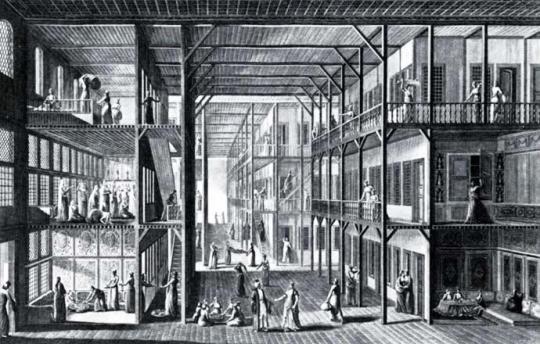
Harem section, Turkey: early 19th century drawing of the section of the palace allocated to the wives and their children
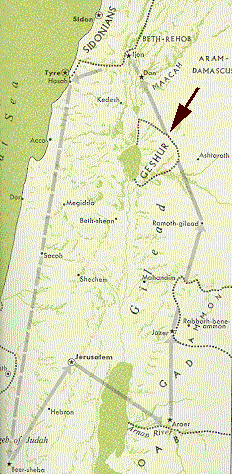
Geshur, the rich agricultural land where Maacah was born
A Royal Princess Marries
What do we know about Maacah?
Maacah began life as the daughter of King Talmai (Tholmai) in the neighboring kingdom of Geshur. Her father must have been astute: when David became king of Israel, Talmai quickly switched his allegiance from Saul and gave Maacah to David, who was now a suitable match for his daughter.
Two things were expected of the young princess:
- she must advance the interests of Geshur
- she must provide royal children.
Maacah became the visible sign of friendly relations between the two kingdoms, the human stamp on a peace treaty.
Married life for Maacah
After her marriage, Maacah lived in the harem with the retinue of personal attendants she brought as part of her rich dowry, the dowry of a king’s daughter.
She was fertile, and bore her eldest son to David some time in the seven years that the court was stationed in Hebron when David was king of Judah, before the move to Jerusalem.
This son was Absalom, and though he was the third of David’s sons, he was the first one born of a royal princess. His two older brothers were Amnon and Chileab, born to commoners.
From the beginning, people commented on the exceptional good looks of Maacah’s children. While David was handsome, we can assume that Maacah was also lovely, since she produced such beautiful children.
Absalom was followed by a daughter Tamar, and at least one other son, Hanan. There may have been others, but the biblical text does not name them.
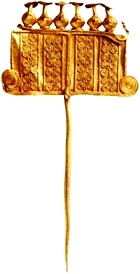
Gold diadem embellished with blue, green, red, and white enameled flowers;
from a tomb at Canossa, 3rd century BC
Any reconstruction of Maacah’s life from this time on presupposes that she survived the birth of her youngest child and lived a normal life-span.
Who will be king after David?
Absalom’s position as third son did not debar him from succession to the throne, since the rule of primogeniture had not yet been firmly established in the federation of tribes that David ruled.
In fact, many of David’s subjects believed that a ruler should be chosen by popular acclaim, with the people themselves deciding who would govern them.
So Maacah, whose son Absalom was well-qualified by birth and temperament to be leader, had every right to hope that her son would succeed David. He was certainly idolized by all, of high and low status, and would have been a popular leader.
This might have happened in time, but for events that shattered Maacah’s future.
Maacah’s Daughter Tamar is Raped
Her daughter Tamar was beautiful, and when she reached puberty she caught the attention of her older half-brother, Amnon, who developed an obsession with her, so much so that his mental and physical health began to break down. He had to have her, no matter the consequences.
 Tamar was confined by court protocol to the women’s quarters, and guarded there by the eunuchs attached to David’s harem, so getting her alone was no easy matter.
But Amnon and his cousin invented a ruse to lure her into Amnon’s bedroom, and there he raped her. As soon as he finished this violent act and saw her anguish, he loathed the young girl with a revulsion as strong as the lust he had previously felt.
For further information on this story, go to The Story of Tamar.
Maacah and Absalom immediately went to David, expecting him to act. Tamar’s life was ruined unless Amnon married her – a deflowered girl would never be accepted as wife by another man, and Tamar would be condemned to spending the rest of her life in a back room of the harem, childless and despised.
Marriage to a half-brother might not be an accepted custom in Israel, but is was common enough in some of the nearby kingdoms.
Moreover, the law in Exodus 22:16-17 stated that a man who seduced a virgin must marry her. Marriage seemed the logical solution.
King David Does Nothing
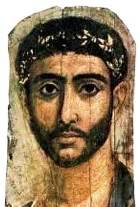
Face of a rich young man, perhaps a prince; from a Fayum coffin portrait
To Maacah’s and Absalom’s horror, David did nothing. He was angry with his eldest son Amnon, but did not punish him in any way, or make any move to right the wrong done to Tamar.
Nothing seemed to matter to David, not even
- Maacah’s status as the daughter of a king
- Tamar’s right to protection from her father or
- Absalom’s anger at the rape of his sister.
None of these things propelled David into taking action against the rapist, who remained David’s beloved firstborn.
Maacah and Absalom realized that if they wanted justice they would have to create it for themselves.
Absalom murders Amnon
There was nothing they could do for the moment, since Amnon was aware of the danger they posed and kept himself surrounded by guards at all times. They would have to lure him into a trap.
They bided their time for two years, giving the impression they had accepted David’s decision.
Then Absalom invited all his brothers including Amnon to a sheep-shearing festival at Baal-hazor, about 20 miles north of Jerusalem. At the banquet that followed when Amnon was sufficiently befuddled with wine, Absalom’s servants bludgeoned and stabbed him to death.
Maacah and Tamar would not have been present but would certainly have known of the plan, and perhaps Maacah was the one who engineered it.
Immediately after the murder Absalom fled north to Maacah’s homeland in Geshur, where he found refuge with his grandfather.
Absalom returns. What will happen?
 What did Maacah do now? Go with her son to her father’s house in Geshur? Or remain in David’s harem? There is no information on this.
But events showed there was someone at David’s court who was still working on Absalom’s behalf, and it may well have been Maacah – still in David’s harem though with her standing diminished by the disgrace that had fallen on her beautiful children.
After three long years someone convinced Joab, David’s trusted nephew and strong-arm man, to go to David and plead with him to let Absalom return.
Joab was eventually successful, and Absalom was allowed to return from Geshur to Jerusalem, on condition that he stayed in his own house and did not attempt to enter the palace precincts.
Why did David allow Absalom to return? Was it Maacah’s influence, or did the crafty David realize that he needed to keep the increasingly popular Absalom close to home where he could be watched – keeping his friends close, but his enemies even closer?
The tables are turned on David
David himself had undermined King Saul; now he was being undermined in turn by his own devious son. For it was all too obvious that the people still adored Absalom, and Absalom was making capital of the fact.
For two more years David held Absalom, and presumably Maacah as well, at arm’s length. Absalom could live within the city walls but could not approach his father or enter the palace.
Then was there a public reconciliation between father and son, and everyone, taking it at face value, breathed a sign of relief. All seemed well.
In fact it was only one more play in the game that Absalom and Maacah were playing. They had never, would never, forgive David for the way he had abandoned Tamar.
Now they were faced with an additional dilemma: David’s new young wife Bathsheba had given birth to Solomon, a boy who showed extraordinary promise. Not only that, but his mother was determined that her son would one day be king.
Absalom had been well and truly replaced in his father’s affections.
Maacah’s Son Absalom Rebels
There was no time to waste, and within months of his return to the court Absalom became bolder.
- He assumed some of the trappings of a king – a retinue of fifty bodyguards, and horses and a chariot.
- He also publicly criticized David’s ability to act as a judge, part of the role of king.
Maacah watched and waited.
A warrior mask
Four years after his return from exile, Absalom made his move. He went to Hebron, the old capital, whose people had always resented David’s relocation of the capital to Jerusalem, and there he summoned the tribes of Israel to his side.
For awhile it looked as if his revolt might succeed. He had the advice of Ahitophel, Bathsheba’s grandfather, as shrewd a consigliore as every breathed.
Since the seduction of Bathsheba, Ahitophel has been David’s enemy.
But at a crucial moment Absalom ignored Ahitophel’s advice and chose a battle plan proposed by a planted spy of David’s.
This spelt disaster, and a terrible slaughter followed. Thousands of Absalom’s supporters died in the battle, and Maacah’s beautiful son was killed like an animal, speared through the heart as he hung helpless in a tree branch.
It was Joab who killed him, the same man who had engineered his return to David’s court.
- Had that been the murderous plan all along?
- Had Absalom walked into a trap?
David Mourns for Absalom
David mourned his son extravagantly.
His grief, long celebrated in the arts, may have been partly genuine. He had after all lost a brilliant, beautiful son, albeit one whom he had mistreated.
But David’s grief ended abruptly when Joab pointed out that mourning a rebellious son did not sit well with the families of soldiers who had died to save David’s throne. After all, he had other sons…
What happened to Maacah?
We hear nothing of Maacah’s fate.
As the mother of a rebellious son, her life would have been forfeit if she remained in the palace in Jerusalem, but her fate would have been almost as bad if she fled to Geshur.
There was no mercy in the ancient world for a royal who failed.
Her line was not wiped out. Her granddaughter Maacah II, Absalom’s daughter, would become the beloved wife of Solomon’s son Rehoboam. In this sense her story continued.
What’s the historical setting of this story?
David had replaced King Saul as leader of the Jewish tribes. He was a subtle and gifted man, a military leader, poet, musician, schemer and diplomat.
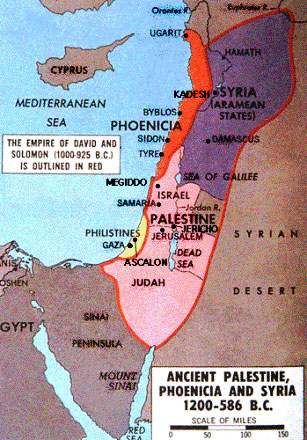
Map of ancient Palestine, Phoenicia and Syria in 1200-586 BC
- Much of his reign was spent in fighting to gain territory and unify Israel.
- He used a combination of military power and diplomacy to remove the threat of the Philistines and to take over the Canaanite towns.
- At various times he held the lands of Ammon, Moab and Edom west of the Jordan, and was able to extend his territory to include Damascus.
- He established treaties with those regions he could not conquer.
This extension of territory made a control center necessary. After seven years in Hebron, David made Jerusalem the capital of his kingdom, a religious, political and military center that he hoped would be a unifying force for the tribes.
This was of course unpopular with the people of Hebron. Absalom exploited this ill feeling when he began his revolt in Hebron.
The changes that David made cost a great deal of money, and the burden of taxes fell on the common people, especially in the northern provinces. The gap between rich and poor began to widen noticeably.
The loose tribal federation that had been the government since the original settlement in Canaan was no longer efficient. It was replaced by a centralized government and a dynastic monarchy.
Before this, land ownership had been common among all economic levels. Almost all families had owned some land.
But during the Kingdom period
- land ownership fell more and more into the hands of the royal family, the priesthood, and the nobles.
- large estates rather than small holdings came to be the rule rather than the exception.
- peasant men and women were often dispossessed of land their family had held for many generations.
- tenant farming became more and more common.
- day laboring and short-term employment for men and women meant a loss of the security that land ownership had given.
- slavery for debt was common.
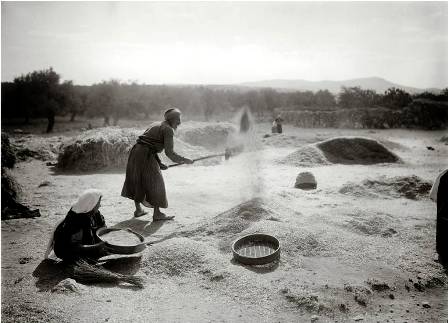
Farmers winnowing grain
The people most affected were those who had been not rich but not poor either, the peasant farming families who occupied a position loosely equivalent to the lower middle class in modern society.
Land still remained the basis of wealth, and agriculture was still the mainstay of the economy, but the ordinary people who produced the food were not as well off as they had been.
Their surplus output now supported a large, non-producing population including the army, the civil bureaucrats, and the official priesthood.
The small villages became less important, and Jerusalem began to dominate the thinking of Israel.
The focus of power moved away from the family and tribal unit based in villages, to the public, urban sphere.
But not without a struggle.
Bible references
Biblical reference: 2 Samuel 3:3, 1 Chronicles 3:1-2, 11:26-47
Women in the Bible – Royal House of David
Maacah and the danger of playing favorites with your children