
Top 10 Bad Women
- Delilah who tempted Samson
- Salome who danced for Herod
- Queen Jezebel, eaten by dogs
- Eve, the source of all our troubles
- Herodias plotted John’s death
- Potiphar’s wife desired Joseph
- Maacah, not so lucky
- Lot’s wife looked back!
- Her incestuous daughters
- Ruthless Queen Athaliah
1 Delilah & Samson
Who was the notorious Delilah?
She was a beautiful Philistine woman, and a successful courtesan. The strongman Samson loved her, though what he meant by ‘love’ is uncertain – he once described making love with his wife as ‘ploughing with my heifer…’.
Despite an appalling record of violence, Samson was a hero to the Hebrew settlers who were trying to find a place for themselves in a land already occupied by Canaanites and Philistines.
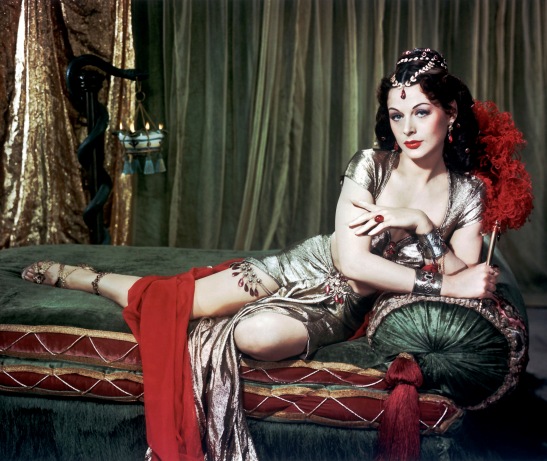
Bible Bad Woman Hedy Lamarr in ‘Samson and Delilah’,
Why was Samson so strong? Was there a trick to it? Samson was enormously strong, and people believed this must be because of some magic secret. Some Philistine leaders approached Delilah and offered her an immense sum of money if she found out the secret of Samson’s strength, which of course they wanted to destroy.
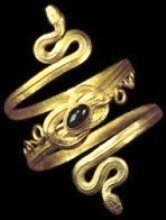
Bible Bad Women: Gold snake bracelet, 4th–3rd century BC
Three times she asked him, and three times he gave a false answer. Eventually he told her that his strength resided in his hair which, since it had never been cut, was far more plentiful that any other man’s.
Why did Delilah betray Samson? Since he was probably only a customer to Delilah, and since the money she would get for the secret would be enough to release her from her life of prostitution, she gave his secret away. She called the Philistines, and while Samson slept she allowed them to cut off his luxuriant hair.
Without his hair – and therefore his strength – Samson was easily overpowered: ‘the Lord had left him’.

Read what modern writers say about Bad Women
What happened to Samson? And Delilah? Delilah may have expected a quick death for him, rather than the protracted torture that followed his capture. His eyes were gouged from their sockets and he was thrown into prison.
After that, Delilah disappears from the story, but probably the Philistines honoured their promise of payment and Delilah enjoyed a comfortable retirement.
2 Salome – incest?
The princess Salome is remembered for two things:
- the Dance of the Seven Veils and
- the execution of John the Baptist.

Bible Bad Women: veiled woman
Who was Salome?
She was a royal princess of the Herodian dynasty in 1st century Palestine, a province in the Roman Empire.
The young princess started off with certain natural advantages:
- she was the daughter of Herodias, a clever and beautiful woman, and
- she was step-daughter of the weak-willed Herod Antipas, who ruled a large part of ancient Palestine.
How did she know John the Baptist?
Herod Antipas had clapped John into prison because he criticised the marriage between Antipas and Herodias – it flouted Mosaic law which forbad marriage to the wife of one’s brother. Herodias had previously been married to Antipas’ half brother Philip.
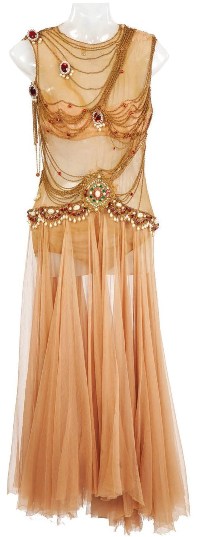
Dress worn by Rita Hayworth in the movie ‘Salome’ – dance of the seven veils. Bible Bad Women.
Why didn’t they just ignore John the Baptist?
The political situation in 1st century Palestine was delicate, and Antipas and Herodias simply could not afford to have a holy man/trouble-maker roaming around the country criticizing the royal family. They knew they had to act – but they could not do so openly.
The best they could do was to clap John into prison and leave him there, which they did. Unfortunately this did not solve the problem and the royal family, particularly Herodias who faced being divorced if John kept on ranting, looked for another solution.
What happened at Herod’s birthday party?
It is hard to know how much of what happened was pre-arranged, but at Antipas’ birthday dinner the young Salome danced, and pleased her step-father mightily. In his cups, or seeming to be, Antipas promised her anything that she asked for.
She went to her mother for advice: what to ask for?
Herodias seized the opportunity and told her to ask for John’s head.
Salome went back to the banquet hall and made her terrible request.
Antipas immediately granted it. John was beheaded (and therefore silenced permanently), and the young princess calmly went on with her life – she married well, twice, and lived a long life.
Was John’s beheading planned beforehand?
Herod is often shown as lusting after the pre-pubescent Salome, who desired John the Baptist. This may or may not have been true.
What is known is that the family was politically astute – Jesus called Antipas ‘the fox’. It is more likely that the girl simply acted to protect her mother against the criticism of a man who was, to Salome, a crazed fanatic.
You can read the original gospel account at Salome’s story
Or watch the Hollywood version of this story:
Rita Hayworth in the famous Dance of the Seven Veils
3 Queen Jezebel
Was Jezebel as wicked as they say?
Born to power, the Bible’s favourite villainess Jezebel was a princess from the rich city of Sidon where her father ruled.
She married the young prince Ahab, later a famous warrior king of Israel.
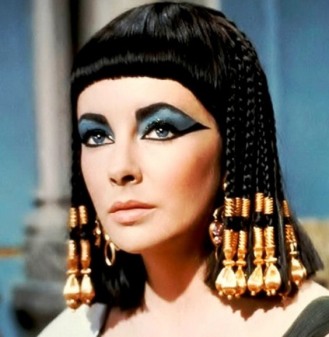
Queen-priestesses in the ancient world wore ritual make-up and wig, as in this scene from the movie ‘Cleopatra’. Jezebel ‘painted her eyes and adorned her head’ (2 Kings 9:30).
What did she do wrong?
Though she was queen of Israel, she stayed loyal to the gods and goddesses of agriculture and weather – Baal, god of storms and water, and his divine wife Asherah, who was a fierce champion of the family. This was a black mark against her with the powerful priests of Yahweh in Israel.
Moreover, Jezebel’s father in Sidon was an absolute monarch, and she assumed that a king’s word was law, not to be questioned.
This was not the Israelite way, as she soon found.
What happened at Naboth’s vinyard?
At one stage her husband Ahab needed a plot of land. But the owner, a man called Naboth, would not sell. Jezebel was not accustomed to this sort of behaviour. She saw it as gross insubordination. She decided to act.
She arranged the judicial murder of Naboth, and the land was confiscated. It now belonged to the king.
Jezebel, accustomed to the absolute power her father held in Sidon, did not doubt she was within her rights.
Many people disagreed – especially the Yahwist priests, who saw their own power diminishing.
A struggle for the throne
When her husband Ahab died in battle, Jezebel’s son Ahaziah succeeded to the throne. Two years later he died in an ‘accident’, falling from a high balcony in the palace. Who pushed him will never be known.
Her second son Joram became king, but after some years he was also murdered in a palace coup led by a sinister man called Jehu.
Jezebel was cornered. Her turn came next.
How was Jezebel murdered?
In a violent struggle at the palace Jezebel was flung by her own eunuchs from a high balcony, down into the stone courtyard below.
She died as a queen should die, magnificent and defiant, hurling insults at Jehu right to the end.

Jezebel’s body was eaten by hunting dogs, let loose during the sacking of the palace.
What happened to Jezebel’s body?
The usurper, Jehu, ran his iron-wheeled chariot back and forth over her dying body, then went into the palace for a celebratory dinner.
Afterwards he remembered that her body was still lying in the courtyard of the palace, and ordered that it be buried.
But the dogs had got to her first, and all that remained of this royal woman was her head and her hands.
Bible references: conflict between worshippers of Yahweh and Baal 1 Kings 16:29-34, 18:17-40, 19:1-3; the episode of Naboth’s vineyard 1 Kings 21:1-16; the death of Jezebel and her family 1 Kings 22:29-40, 2 Kings 9:21-28, 9:30-37.
Read the original story at Jezebel: the Bible text
4 Eve – trouble?

The infamous ‘apple’ in the story of Eve was a pomegranate, an ancient symbol of fertility.
Bad Bible Women.
At a key moment in the story of creation, God made a creature ‘in his own image’. This creature had a nature that was essentially creative. It could imagine, invent, and change the world, as God did in the Genesis story.
But the creature was alone, so God created a mate for it. He took a bone from the creature’s rib cage and fashioned Woman – Eve.
Man would only be complete if there was a woman beside him.
What was Eve like?
Eve was even more creative (and therefore God-like?) than her mate, Adam. When one of the reptiles in the Garden of Eden spoke to her, suggesting she try something new, she was intrigued (wouldn’t you be?).
She had been given the power of making decisions. If she did as the reptile suggested and ate the Apple (or rather, the Pomegranate – there were no apples in the ancient Middle East) she might gain new understanding and wisdom.

Adam and Eve, painting by Tamara de Lempicka
Why did Eve believe the serpent?
Eve was an innocent. She had no previous experience of deceit, so she believed what she was told. She made her choice, deciding to seek knowledge of good and evil rather than be obedient to God’s command.
It was a dangerous choice – the quest for knowledge should always be balanced by wisdom. Eve learnt this lesson the hard way.
Adam eats the apple too.
She took the apple to Adam, so that he might taste it too. He ate it without thinking or arguing. Like Eve, he misused his ability to make decisions and did not consider the consequences.
What happened then in the Garden of Eden?

Instantly, the original harmony between humanity and nature was disrupted.
The Garden of Eden was lost – as it continues to be lost, every day, in our world.
Of the two, Eve was the mover and shaker, introducing change in an otherwise static world.
Read the Bible text, Genesis 2:18-4:2; 4:25
5 Ruthless Herodias
The dangerous life of a little princess
This little girl’s life began in darkness, in a welter of blood. Before she was born, her grandfather King Herod the Great killed her grandmother, the lovely, tragic Mariamne, in a fit of jealous rage. Or that was the story.
Then he killed Herodias’ father, his own son.
Her mother fled to Rome with Herodias and her younger brother Agrippa, and stayed there until it was safe to return – when King Herod was safely dead.
Little Herodias grew up as a royal aristocrat in Rome, pampered and spoiled.
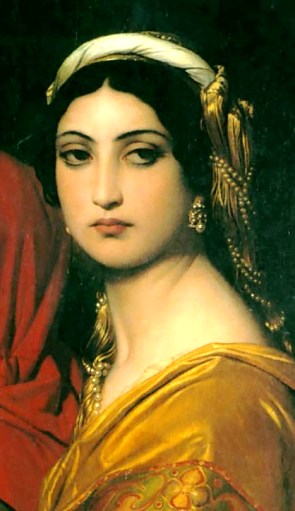
Herodias, painting by Delaroche. Bad Bible Women
And you think your family is complicated…
Her first husband, and the father of her daughter Salome, was her uncle Philip, also a son of Herod the Great.
Philip was a good but rather dull man, and she soon divorced him and married Philip’s half brother Herod Antipas (who was also her uncle).
It sounds complicated, but marriage to an uncle was normal practice among royal families in the eastern part of the Roman Empire.
Soon after she and Antipas were married, John the Baptist began to criticize her for marrying her former husband’s brother.
In response, Antipas put him in prison.
Whose idea was it to kill John the Baptist?
Hard to say.
- Mark in his gospel says it was Herodias who wanted to see John killed.
- Matthew blamed Herod and said that from the start he plotted to be rid of John.
In all probability, it was a bit of both. Royal or not, Herodias’ family was rat cunning, and John’s harangues were de-stabilizing a politically sensitive country. If a revolt broke out, Antipas and Herodias would be the losers, and they were well aware of the fact.
What happened at the birthday banquet at Machaerus?
So arrangements were made: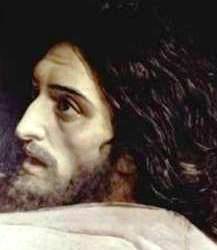
- Salome danced
- Herod promised
- Herodias advised and
- John was beheaded.
His death acted as a warning to any other would-be agitators. It was expedient. None of the royal family would have seen it as particularly important.
And after John’s execution?
As far as the gospels are concerned, that was the end of the story.
But in fact there was quite a bit more.
Some years later Herodias’ younger brother Agrippa was made a king by the Roman Emperor Caligula – Agrippa was a vicious young ne’er-do-well, much like Caligula, and the two young men were close friends.
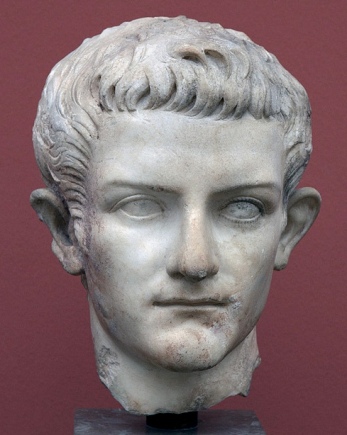
Bust of the emperor Caligula made at about the time of his meeting with Herod Antipas and Herodias.
Bad Bible Women.
Herodias was incensed at the injustice of it all. Why should her own husband Antipas, who had served Rome loyally for many years, not receive the same honour?
Disaster for Herodias
She talked Antipas into going to Rome to ask for this favour, but when they met Caligula face-to-face the young Emperor casually stripped them of all their possessions, everything single thing they owned, and gave it instead to Agrippa.
He also sentenced them to life-long exile.
On being reminded that Herodias was Agrippa’s sister, he made her an offer: disown her husband and she would be allowed to retain her own wealth.
Stand by your man!!!
It was here that Herodias showed her true mettle. She proudly rejected Caligula’s offer and went instead into exile with her husband.
It must be said, however, that exile in this case meant living in a Roman city in the south of France, perhaps not such a terrible sacrifice after all.
Bible reference Mark 6:17-28, Matthew 14:1-11; Luke 3:19-20
6 Potiphar’s Wife
- Joseph, the son of
- the Bible matriarch Rachel and
- her husband Jacob, was sold into
- slavery (read about the different types of slaves)
- and taken to Egypt.
What happened to Joseph in Egypt?
Once there, he made the best of things and eventually became an outstanding success – Chief Steward for a rich Egyptian, Potiphar.
And there was the problem…
Who was Potiphar’s wife?
Potiphar had a beautiful wife, a woman used to getting her way. She was lonely, bored and constantly in the company of an unusually handsome man, a sort of Brad Pitt of the ancient world.
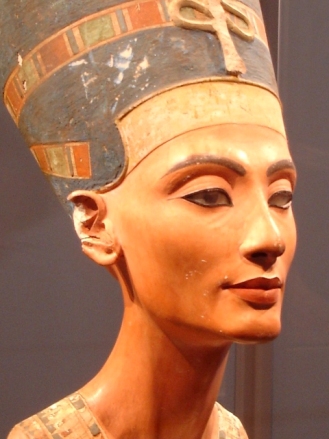
Statue of the Egyptian queen Nefertiti
Neglected by her husband who may have been a eunuch, she fell in love with Joseph – to the point where he became her obsession.
She saw him daily, and soon the temptation became too much. She made some kind of sexual approach to Joseph – ‘Lie with me’, she said.
What was Joseph to do?
Joseph faced a dilemma. He had either
- to offend the wife or
- betray her husband.
He decided on the former. He avoided her.
But one day when they were alone in the house she grabbed hold of him, pulling him down onto her bed. In the physical tussle that followed she pulled off his linen loin-cloth.
He was naked, and ran out of the room and then out of the house, leaving his clothing behind.
Potiphar’s wife accuses Joseph of rape
Potiphar’s wife was enraged. She was a high-ranking woman, and had probably never been treated this way.
She called to the members of the household, telling them Joseph had tried to rape her. She showed them Joseph’s clothing to prove it. Only her screams had prevented him abusing her, she said.
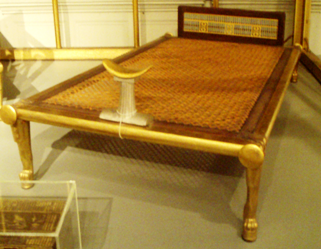
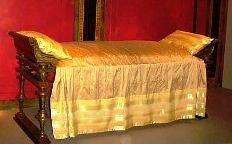
Reconstruction of an ancient Egyptian bed
What was her husband’s reaction?
She waited until her husband came home and told him the same story.
He was enraged – at Joseph? at her? The incident was now common knowledge. As a cuckold he would become a laughing stock.
He charged Joseph with the attempted rape of his wife, and put him in prison.
Of the unfortunate wife, we hear no more.
Bible reference Genesis 39:1-20. Read the story at Potiphar’s Wife cries ‘Rape!’
7 Maacah, beloved
Who was Maacah?
Maacah was a royal princess, but one born under a cloud. Her father was said to be Absalom, who rebelled against his own father King David and was murdered.
But there’s another, darker possibility. She may have been the illegitimate daughter of Absalom’s sister the tragic Tamar, who was raped by her obsessive half-brother Amnon (see the story here). Either way, Maacah did not have a good start in life.
 Maacah marries the heir to the throne
Despite this, Maacah must have been a charmer, because she overcame the conditions of her birth and married King Solomon‘s eldest son Rehoboam.
The Bible says bluntly that he loved her more than any of his other wives and concubines.
When Solomon died Rehoboam succeeded to the throne. That sounds promising for Maacah, but there was trouble brewing.
The ten northern tribes were discontented with the way that power was centralized in the city of Jerusalem. They wanted the old autonomous tribal system restored, so that they could have a say in government.
Maacah’s husband Rehoboam faces serious trouble
- Things came to a head at Rehoboam’s coronation. The ten tribes broke away, leaving Rehoboam with only two tribes (Judah and Benjamin) and his capital, Jerusalem.
- There was trouble from outside as well. Egypt invaded, and Rehoboam’s army was unable to repel them. The entire territory of Judah was left open to rape and pillage.
Worse still (I’m joking) was that the royal women were forced to surrender all their beautiful jewelry (and their honour?) to the invaders. Maacah lost all her personal treasures.
Maacah becomes gebira, the powerful Queen Mother
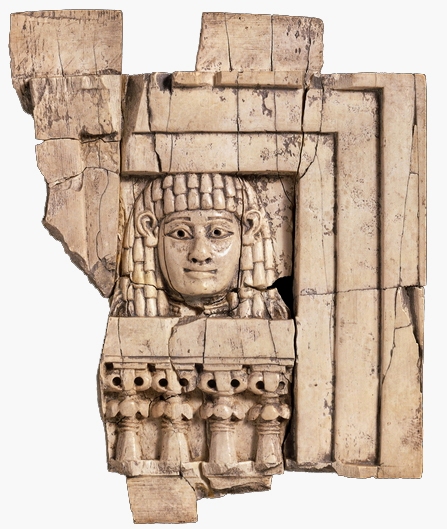
Small piece of carved ivory excavated at ancient Nimrud: it shows the ‘Woman at the Window’, at a harem? or a temple? Is she human or goddess?
Twelve years later her husband died, and Maacah’s son Abijah succeeded him. Now Maacah came into full power as Queen Mother – the most powerful position a woman could hold.
Give me that old time religion?
She immediately began to restore the old religion – worship of the fertility gods Baal and Asherah – and it is for this reason that the Bible regards her as beyond the pale.
Maacah’s reign as Queen Mother lasted for only two years, while her son Abijah reigned.
When he suddenly died he was succeeded by his son Asa, who may or may not have owed his throne to the Yahwist priests.
Maacah demoted, disgraced
In any case, Asa removed her from her position of power and forced her to live out her days in the claustrophobic back rooms of the royal harem.
What an awful end to a brilliant life.
Bible reference 1 Kings 15, 2 Chronicles 11:20-23; 15:16
Read Maacah: beloved wife, devoted mother: why is she a villainess in the Bible?
8 Lot’s Wife looked back
Living in the past – is it a sin?
Lot’s wife is unnamed, but her story is significant. Her crime, for which she was turned into a pillar of lifeless salt, was to look back – in other words,
- to long for the past rather than
- living in the present and
- hoping for the future.

Pillars of salt
Who was Lot’s wife?
She belonged to an important family, and was a high status woman. The Bible calls her ‘Lot’s wife’ rather than giving her individual name to show how important this family was.
Her husband was the nephew of Abraham, and her whole family travelled with Abraham in the long years of wandering as they looked for pasture for their flocks.
Eventually they came to the land of Canaan, and Lot’s family and Abraham’s parted company – their flocks had grown so large it was no longer practical to travel together.
Danger in the Jordan Valley
Lot moved into the Jordan valley. It was not a particularly good place to be. There was constant warfare between the petty kings of the region. Lot’s family and servants were captured by one of these kings, and only saved when Abraham came to rescue them.
A different king of danger in Sodom
Some time after this, Lot settled with his family in the notorious city of Sodom, already well known as a centre of homosexual and libertine practices.
Again, Lot’s timing was bad. God lost patience with the city and sent two men/angels – (read ‘what are angels?) to destroy it, but on Abraham’s insistence these beings warned Lot of what they were about to do.
He in turn warned his family – his wife, two daughters and the two young men who were to marry his daughters. On the following morning Lot’s wife and daughters, no doubt feeling somewhat dubious about the whole thing, packed whatever they could carry and headed for the hills.
Don’t look back – what does that mean?
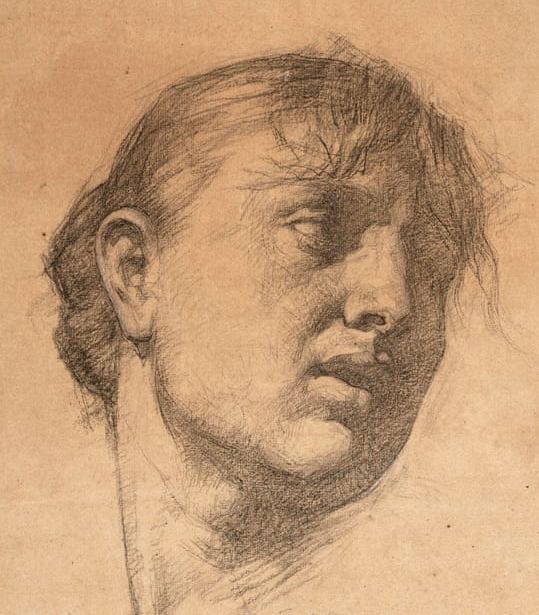
Lot’s Wife, John Peter Russell
The angels/men warned them not to look back: ‘Flee for your life; do not look back or stop anywhere in the plain; flee to the hills, or else you will be consumed.’
The little group fled, and as they hurried away sulphur and fire began to rain from the sky. The cities behind them were consumed in a terrible cataclysm. The noise, smoke and tumult were terrifying – and all the time, they could not look back to where they had come from, to the home they had left.
It became too much for Lot’s wife. She turned her body and looked back – and died instantly, as her body turned from warm living flesh into dry, lifeless salt.
What’s the point of the story of Lot’s wife?
Don’t look back. Life means looking forward, moving forward, not focusing on the past or becoming mired in the dark memories we all have. Looking back will leach the life out of you, and you will become as arid as a pillar of salt.
Jesus gave Mary Magdalene much the same message when, in the garden on the morning of the Resurrection, he told her not to cling to him, but to go and tell the disciples about him.
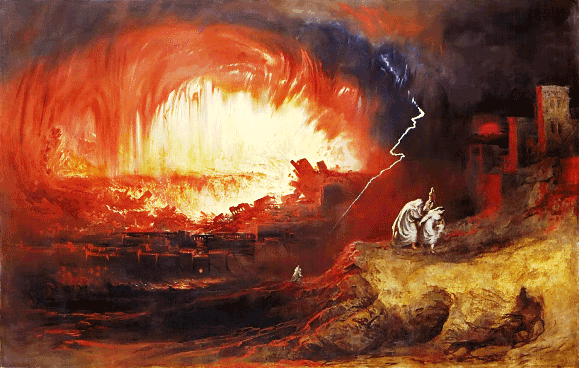
The destruction of Sodom and Gomorrah, John Martin
Bible reference Genesis 11:31-14:16; 19
9 Lot’s daughters
Ruthless determination to have a child? Or just plain incest?
After the cataclysm Lot and his two daughters fled up into the hills, where they were safe.
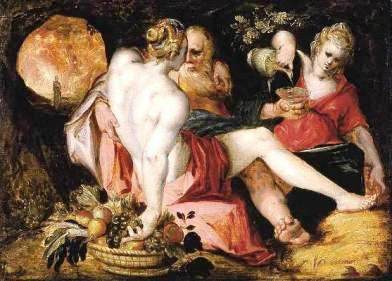
Lot’s daughters, by Jan Muller.
Bad Bible Women.
There were no settlements there, and Lot and the two girls huddled for shelter in a cave. They believed they were the only surviving members of the human race, and that all other people in the world had been destroyed.
The two young men who had been their promised husbands were dead, and the young women saw no hope of ever having children of their own.
How could Lot’s daughters get pregnant?
They decided to use trickery to get themselves pregnant. They would get their father drunk in the evening, and have sex with him as he lay in a stupor.
This they did, both of them, on separate nights. See the painting above; notice that both women are wearing red, the colour of seduction, and that their mother, now turned to salt, stands in the background seeming to watch them).
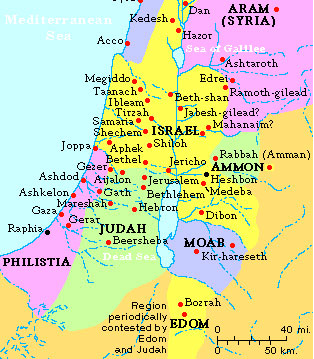
Map of ancient Israel showing Moab and Ammon
Sure enough, both girls became pregnant and eventually bore a son each.
Where did the hated Moabites come from?
The older girl called her son Moab, and he was named as the ancestor of the Moabites (see map at right), a tribe with whom the Israelites were often at war.
(But note too that the Bible’s great heroine Ruth was a Moabite.)
Where did the enemy Ammonites come from?
The younger girl called her son Ben-ammi and he, the Bible says, was the ancestor of the Ammonites – another tribe with whom the Israelites fought (see map).
Thus both the Moabites and the Ammonites, the Bible proposed, were the result of acts of incest between Lot and his daughters.
Bible reference Genesis 19:30-38
10 Queen Athaliah
Another powerful woman: Elizabeth 1 of England
Athaliah: don’t get in this woman’s way!
Athaliah had an impeccable royal lineage. She was either daughter of the greatest king of Israel, Omri, and sister-in-law of the notorious Queen Jezebel, or daughter of Ahab and Jezebel.
At a young age she married the crown prince of Judah, Jehoram. He ruled as king of Judah for eight years before he died at the age of forty – comparatively young, even for those times. He had a turbulent reign, mostly spent on the battlefield.
Jehoram was succeeded by Athaliah’s twenty-two year old son Ahaziah, and her position immediately became much more powerful.
Who was the most important woman in the kingdom?
The top woman in a kingdom was not the king’s wife – wives went in and out of favour. It was the Queen Mother, who acted as counsellor to her son and was often the only person he could trust.

Another powerful woman: Margaret Thatcher, Prime Minister of England
Unfortunately for Athaliah, her son reigned for only one year before he was murdered by Jehu, who had already killed all of the royal family of Israel, including Jezebel.
Athaliah was at the palace in the city of Jerusalem when she heard what had happened.
Who’s telling the story? Who do you believe?
Now the story gets a bit muddy. According to the Bible (but remember that the Bible writers hated her), Athaliah set out to destroy all of her own family, seizing power for herself.
Why she should do this is not clear. She was bound to face violent opposition. The only credible explanation is that every one of her male children and grandchildren were already dead, murdered in an attempted coup, and she did not want to die with them.
Who’s to blame for the murders?
It’s possible that the boys were killed by Jehu’s followers, and that Athaliah managed to save herself but was later blamed for the carnage.
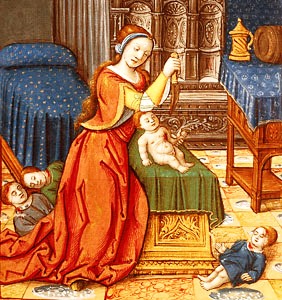
Medieval painting of Athaliah murdering the royal children – her own grandchildren
According to the Bible narrative, one royal princeling, Jehoash, was saved from the massacre by the quick action of Jehosheba, Athaliah’s sister. She hid the baby and his nurse in a remote bedroom of the palace, and kept him hidden for the next six years.
Athaliah, Judah’s only female monarch
During this time Athaliah was the ruler of Judah – the only female monarch Judah or Israel ever had.
But at the end of that six years there was another palace coup, led by one of the Yahwist priests, Jehoiada – who was also, as it happened, the husband of Jehosheba. He knew about the hidden boy, and produced the by-now six year old, telling members of the military they should place the boy on the throne – with himself as regent, of course.
 The breakaway group crowned the boy and anointed him, saluting him with cries of ‘Long live the King!’
Athaliah is hunted down
They then went after Athaliah. She ran to the Temple for sanctuary but was cornered, alone in a hostile crowd. At the Horse Gate of the Temple, they beat and stabbed her to death.
The seven-year old Jehoash became king, and Jehoiada became the most powerful man in the kingdom of Judah.
Bible references for Athaliah: 2 Kings 8:26-29, 9:27-29, 10:12-14, 11:1-16, 2 Chronicles 22:10-23:15
Bible Bad Women

Delilah cut off
Samson’s hair

Salome wanted John’s head.
She got it.

Jezebel.
..the dogs left only
her head and hands.

Eve made her choice…

Herodias met Caligula face-to-face
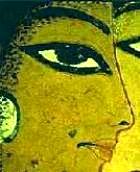
Potiphar’s Wife
met an unusually handsome man, a Brad Pitt of the ancient world

Athaliah was hunted down and murdered
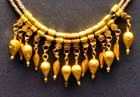
Maacah was forced
to surrender all her jewelry (and her honour?) to the invaders…
Bad women links

Bible Murders
Jehu murders Jezebel and the royal children





Read what modern Bible scholars say about war & weaons